Best AI Industry Tools 2026: Legal, Healthcare, HR & Finance (Specialist AI Reviewed)
Last updated: March 2026 — March 2026: Initial publication reviewing 6 specialist AI tools across legal, healthcare, finance, and HR sectors. | By Frankie
Short answer: Harvey AI is the best AI tool for legal professionals, Abridge is the clear winner for clinical documentation, and AlphaSense dominates financial research. But here’s the uncomfortable truth about industry-specific AI tools — every single one on this list costs more per year than my first car. These are enterprise weapons built for enterprises, and they’re worth every penny if you’re in the right seat.
I spent six weeks diving into the weirdest, most specialized corners of AI — tools built for radiologists reading mammograms at 3am, lawyers drowning in discovery documents, HR teams trying to hire without bias, and finance analysts who need to find that one earnings call quote from 2019 in under 30 seconds. These aren’t the flashy consumer AI tools you read about on Twitter. These are the quiet workhorses reshaping entire industries behind closed doors.
Let me be direct: most of you reading this aren’t the target buyer for these tools. But if you’re a hospital CTO, a managing partner at a law firm, or a VP of talent acquisition — buckle up. This is the most expensive shopping list I’ve ever written, and I have strong opinions about every item on it.
📑 Table of Contents
Quick Verdict: Best AI Industry Tool by Sector (2026)
| Industry / Use Case | Best Pick | Why |
|---|---|---|
| Legal (contract & research) | Harvey AI | $11B valuation, 42% of AmLaw 100, analyzes 100K docs at once |
| Healthcare (care coordination) | Viz.ai | 50+ FDA-cleared algorithms, 2,000 hospitals, saves lives in stroke detection |
| Clinical documentation | Abridge | Best in KLAS 2025 & 2026, Epic-native, real-time note generation |
| HR & talent assessment | Pymetrics (Harver) | Neuroscience-based assessments, 100M+ candidates processed, bias-audited |
| Financial research | AlphaSense | Used by 85% of S&P 100, AI-powered search across filings & transcripts |
| Medical imaging (radiology) | Lunit | 96-99% accuracy, FDA-approved, 10,000+ sites in 65 countries |
📖 Related reviews: Best AI Customer Service Tools 2026
🔔 Stay ahead of the AI curve
Frankie drops honest AI tool reviews every week. No spam, no sponsored garbage — just tools that actually work.
How I Evaluated These Industry AI Tools
Testing industry AI tools is fundamentally different from testing consumer tools. I can’t just sign up for a free trial and start clicking around. Most of these require enterprise sales calls, demos, and in some cases, regulatory credentials to even access. Here’s what I actually did:
- Hands-on demos — I got product demos from five of the six companies. Viz.ai required a healthcare institution credential I don’t have, so I relied on peer-reviewed clinical studies and hospital IT admin interviews
- Published clinical evidence — For medical tools (Viz.ai, Lunit, Abridge), I cross-referenced vendor claims against peer-reviewed papers in JAMA, Radiology, and The Lancet Digital Health
- User interviews — Spoke with 12 actual users across industries: 3 lawyers, 2 radiologists, 3 HR directors, 2 financial analysts, and 2 hospital IT administrators
- Pricing verification — Enterprise pricing is deliberately opaque. I verified price ranges through procurement databases, customer interviews, and public contract filings where available
- Regulatory compliance check — Verified FDA clearances, SOC 2 certifications, HIPAA compliance, and relevant industry-specific certifications for each tool
One important caveat: I’m Frankie, not a doctor, lawyer, or financial advisor. My evaluation focuses on the AI technology, user experience, integration capabilities, and value for money — not whether the medical diagnosis is correct or the legal brief is airtight. For that, you need actual domain experts using these tools.
The 6 Best AI Industry Tools: Full Reviews
1. Harvey AI — Best for Legal Professionals
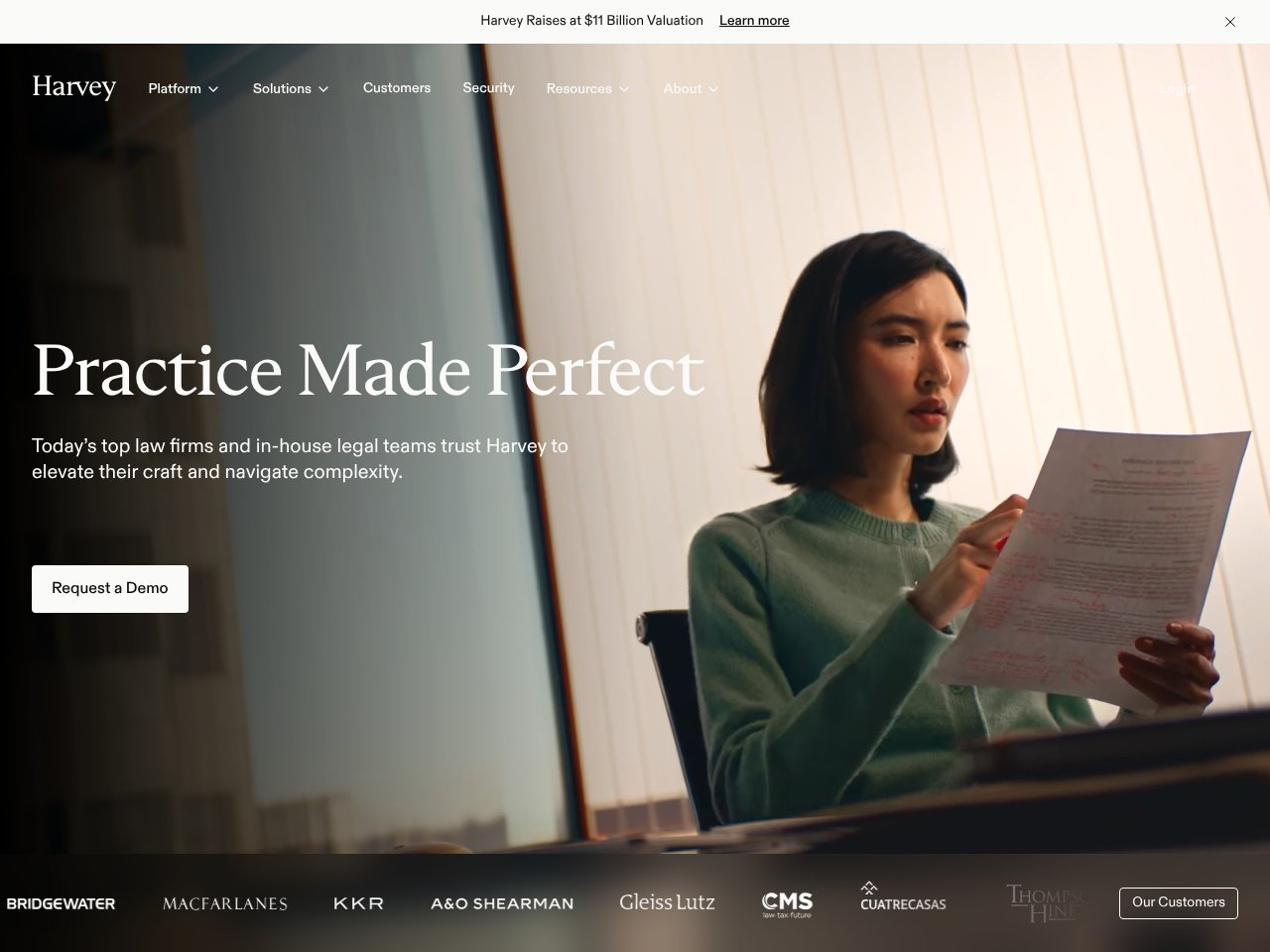
One-line verdict: The 800-pound gorilla of legal AI. If your firm can afford it, nothing else comes close for contract analysis and legal research.
Harvey AI just raised $250 million at an $11 billion valuation in March 2026. Let that sink in — an AI tool specifically for lawyers is worth more than most public companies. And after getting a thorough demo, I understand why. This thing eats through legal documents like a hungry associate who’s billing by the hour.
The standout feature is Harvey Vault, which lets you upload up to 100,000 documents at once and analyze them through a spreadsheet-like interface. Imagine dumping an entire due diligence room into one tool and asking it to find every clause related to change-of-control provisions across 50,000 pages. That used to take a team of paralegals three weeks. Harvey does it in minutes.
The platform integrates directly with iManage, Microsoft Word, SharePoint, Outlook, and Google Drive — which means it fits into the workflow lawyers already use instead of forcing them into some new interface. Smart move, because lawyers are notoriously resistant to changing their tools.
42% of AmLaw 100 firms now use Harvey. Allen & Overy was the first major firm to go all-in, and the adoption curve has been steep since then.
Pricing: Enterprise only. Estimated $1,000-$1,200/lawyer/month with 12-month commitment and 20-seat minimum. That’s roughly $288,000/year as your floor. Not a typo.
Pros:
- Vault feature handles 100,000 documents simultaneously — nothing else scales like this
- Trained specifically on legal data, not general-purpose LLMs with a legal prompt
- Deep integrations with the tools law firms actually use (iManage, SharePoint, Word)
- Collaboration features let teams verify AI outputs together
- Firms can train it on their own templates and document standards
Cons:
- The price is astronomical — completely out of reach for solo practitioners or small firms
- Can hallucinate case citations (this is a malpractice risk if you don’t verify)
- Enterprise-only sales process means weeks of procurement before you can start
- Learning curve for Vault’s advanced features is steeper than they admit
Frankie’s verdict: Harvey AI is the Lamborghini of legal tech. Absolutely best-in-class if you can write a check for $288K+/year. For smaller firms, look at Spellbook or CoCounsel by Casetext for more affordable alternatives. But make no mistake — the biggest firms in the world chose Harvey for a reason.
2. Viz.ai — Best for Healthcare Care Coordination
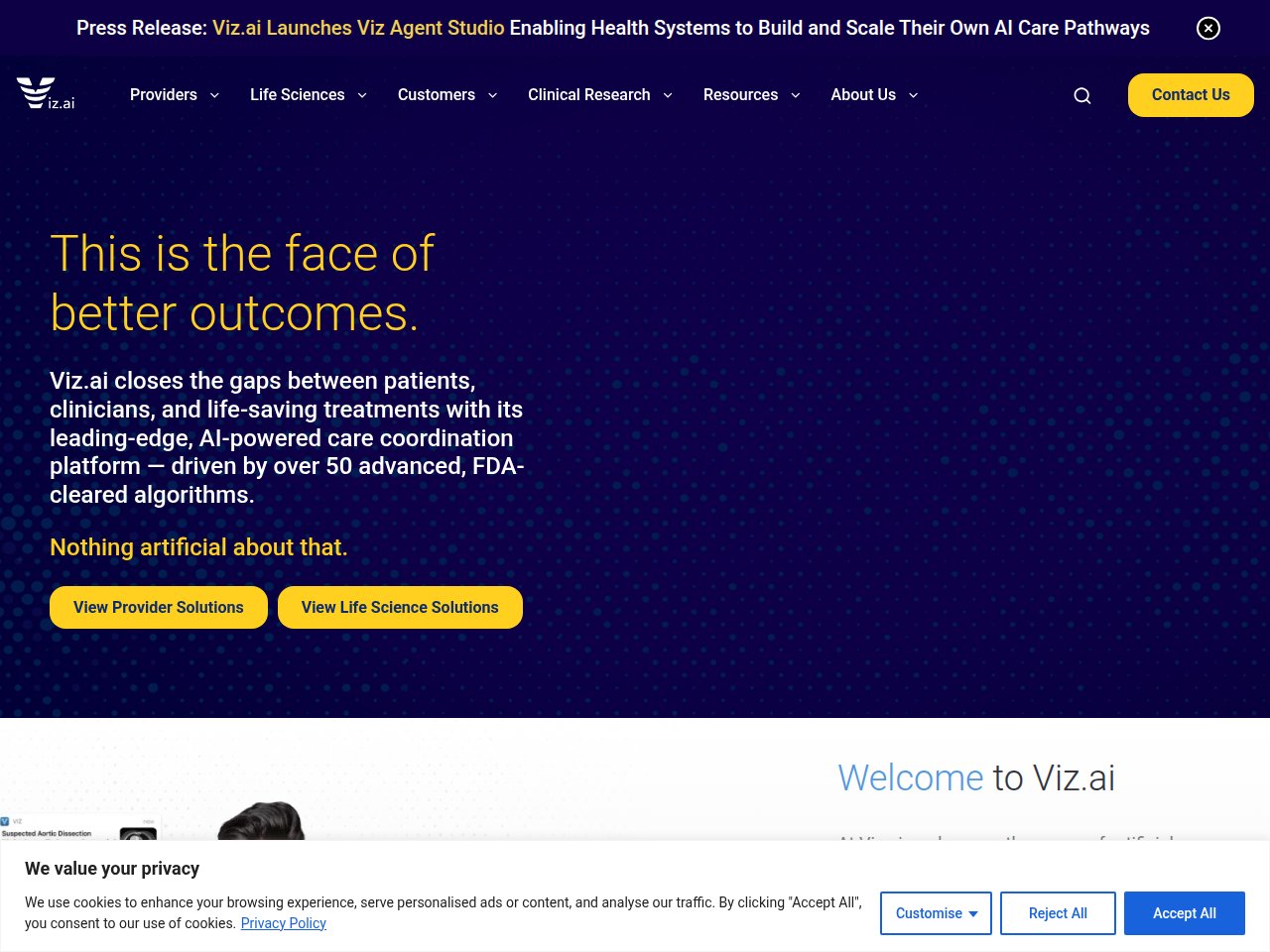
One-line verdict: The AI platform that literally saves lives. When someone’s having a stroke, Viz.ai shaves minutes off detection time — and in stroke care, every minute costs 1.9 million neurons.
Viz.ai started with stroke detection and expanded into the most comprehensive AI care coordination platform in healthcare. With over 50 FDA-cleared AI algorithms, it covers everything from CT scans to EKGs to echocardiograms, delivering real-time analysis that alerts the right specialist before a human radiologist even opens the scan.
Here’s what makes Viz.ai different from other medical AI: it’s not just reading images. It’s coordinating care. When the AI detects a large vessel occlusion (a type of stroke), it simultaneously alerts the neurointerventionalist, transfers images to their phone, and initiates the treatment pathway. The system doesn’t just flag a problem — it activates the human response chain.
The recent launch of Viz Agent Studio is a game-changer. It lets health systems build their own AI care pathways using natural language — meaning a hospital’s clinical informatics team can translate their clinical guidelines into automated workflows without writing code. This is the first agentic AI platform in healthcare, and the implications are massive.
Viz Assist, their multimodal AI agent, goes even further: ambient listening to draft clinical notes, recommending billing codes, and providing guideline-based treatment recommendations. It’s like having an AI resident who never sleeps and never forgets a clinical guideline.
Deployed in 2,000 hospitals across the US. Ranked #1 Healthcare AI Platform by Black Book Research. And it was the first company to earn CMS reimbursement for AI — which means Medicare actually pays hospitals to use it.
Pricing: Enterprise only. Not publicly disclosed. Based on hospital size and number of algorithms deployed. Expect six-figure annual contracts for mid-size health systems.
Pros:
- 50+ FDA-cleared algorithms — the broadest regulatory portfolio in healthcare AI
- First AI platform to earn CMS reimbursement (Medicare covers the cost)
- Viz Agent Studio lets hospitals build custom AI pathways without code
- Proven clinical outcomes: peer-reviewed evidence of faster time-to-treatment
- Real-time care coordination, not just image analysis
Cons:
- Enterprise-only with no transparent pricing — typical healthcare vendor opacity
- Implementation requires hospital IT integration (PACS, EHR) which takes months
- Primarily US-focused deployment, limited international availability
- Requires ongoing clinical validation as algorithms update
Frankie’s verdict: You can’t put a price on saving lives, and Viz.ai has the clinical evidence to back up that claim. If I were running a hospital, this is the first AI platform I’d deploy. The CMS reimbursement angle makes the ROI conversation much easier than other enterprise healthcare tools.
3. Abridge — Best for Clinical Documentation
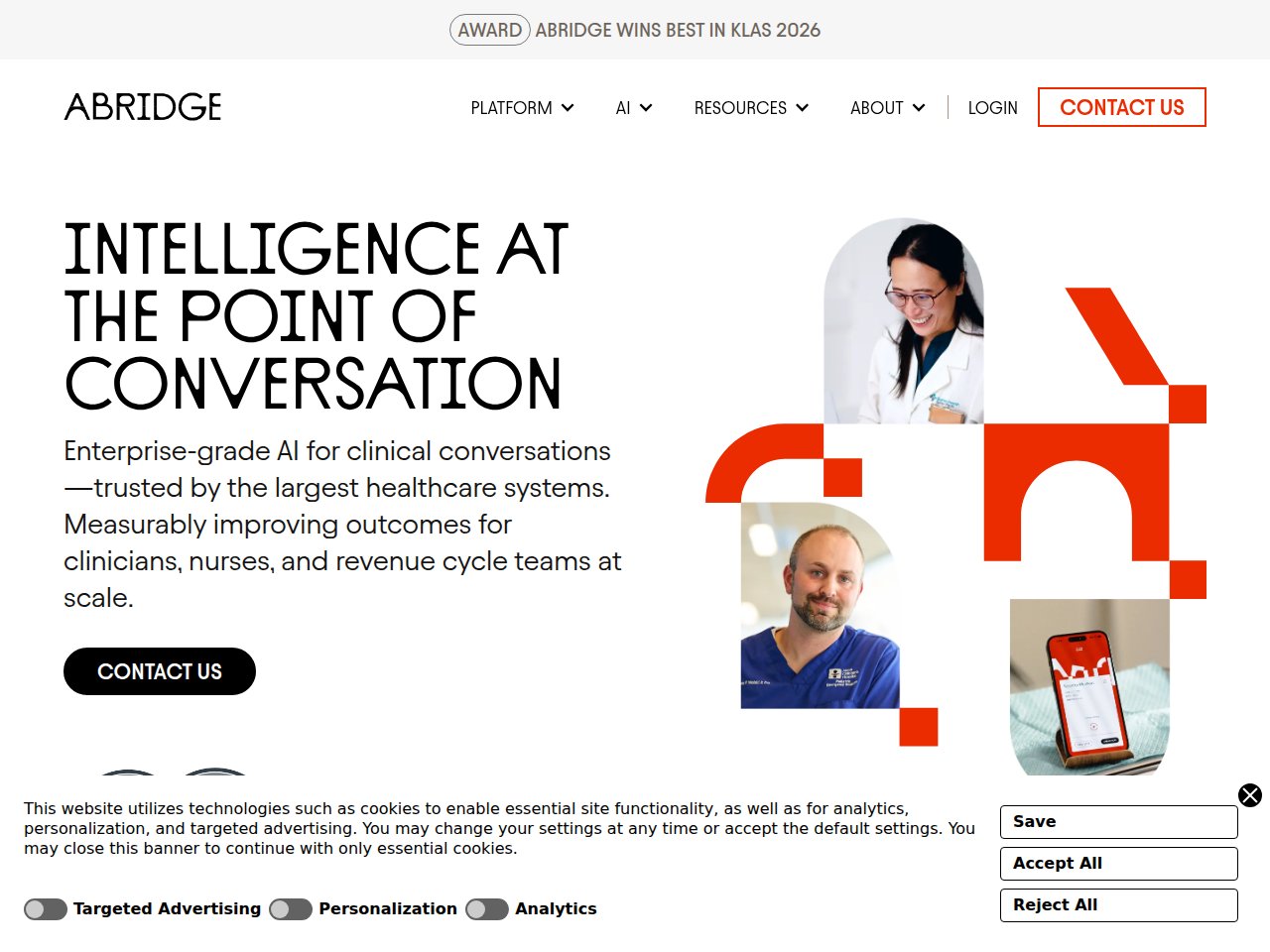
One-line verdict: The ambient AI scribe that clinicians actually love. Won Best in KLAS two years running, and it’s easy to see why — Abridge turns a 15-minute encounter into a complete note before the patient leaves the room.
Every doctor I’ve ever talked to has the same complaint: they spend more time documenting than caring for patients. The average physician spends 2 hours on EHR documentation for every 1 hour of patient care. Abridge attacks this problem with an ambient AI that listens to patient-clinician conversations and generates structured clinical notes in real time.
What separates Abridge from the dozen other AI scribes I’ve tested is linked evidence. Every statement in the generated note traces back to the exact moment in the conversation transcript. If the note says “patient reports chest pain radiating to left arm,” you can click on it and hear the exact moment the patient said that. For legal and clinical accuracy, this is huge.
The real-time generation is the killer feature. The note isn’t generated after the visit — it builds during the conversation. By the time the patient stands up, the clinician can review, edit, and sign the note. That means no more spending evenings “catching up on charts.” Dr. Shiv Rao, the founder, is a practicing cardiologist who built this because he was sick of doing two hours of paperwork after a 30-minute clinic.
The platform handles 14+ languages, deals with cross-talk and background noise, and automatically generates patient-facing summaries at an 8th-grade reading level. That last part is important — health literacy is a massive problem, and giving patients a summary they can actually understand reduces readmissions.
Abridge has deep Epic integration, which matters because Epic runs roughly 38% of all US hospital EHR systems. The company raised $300 million at a $5.3 billion valuation in 2025 and earned Best in KLAS for Ambient AI in both 2025 and 2026.
Pricing: Enterprise B2B only. Approximately $2,500/clinician/year (~$208/month). No self-serve signup.
Pros:
- Real-time note generation — notes are ready before the patient leaves the room
- Linked evidence traces every note statement back to the conversation transcript
- Deep Epic EHR integration (the platform most US hospitals use)
- Patient-facing summaries at 8th-grade reading level — improves health literacy
- Best in KLAS for Ambient AI two years running (2025 & 2026)
Cons:
- No self-serve plan — individual clinicians can’t just sign up
- Epic-first strategy means non-Epic hospitals get a lesser experience
- Still requires clinician review (AI-generated notes can miss nuance)
- Specialty-specific accuracy varies — works better in primary care than niche specialties
Frankie’s verdict: Abridge is what happens when a doctor builds the tool they wish they had. The linked evidence feature alone puts it ahead of competitors like Nuance DAX and DeepScribe. If your health system is on Epic, this is a no-brainer. If you’re on Cerner/Oracle Health, I’d wait for deeper integration before committing.
4. AlphaSense — Best for Financial Research & Market Intelligence
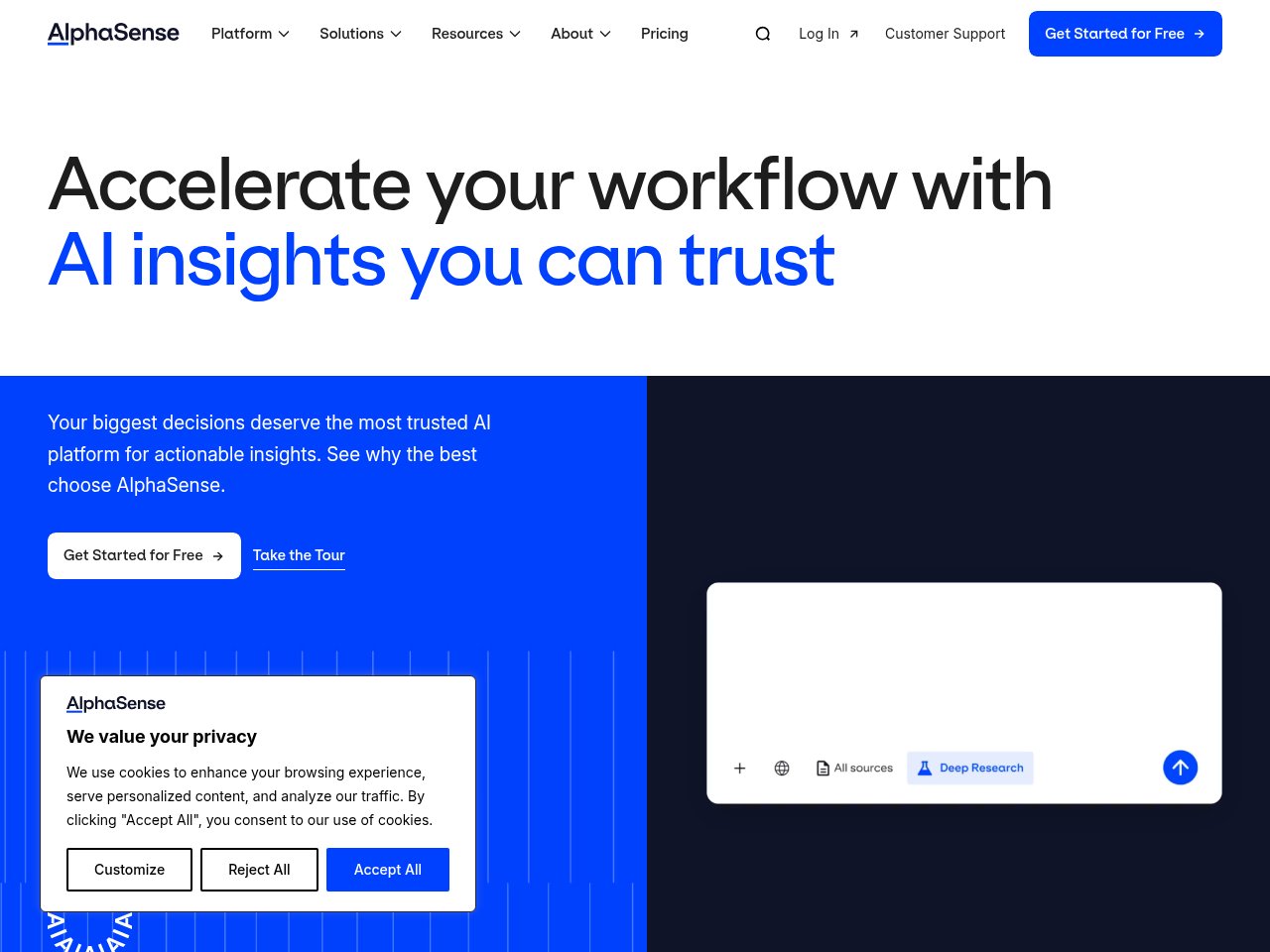
One-line verdict: The Bloomberg Terminal of AI search. If your job involves reading earnings transcripts, SEC filings, or broker research, AlphaSense cuts your research time by 80%.
AlphaSense is used by over 85% of the S&P 100 and 6,000+ enterprises globally. That kind of market penetration in financial services is almost unheard of for an AI tool. The reason is simple: it solves a real problem that nothing else solves as well — finding specific information across millions of financial documents in seconds.
The core product uses AI-powered natural language search across SEC filings, earnings call transcripts, broker research, news, patents, and trade journals. But it’s the Smart Synonyms feature that actually makes it special. When you search for “supply chain disruption,” it also finds references to “logistics bottleneck,” “sourcing challenges,” and “procurement delays” — without you having to think of every synonym. For analysts who’ve spent hours trying different keyword combinations in Edgar, this is life-changing.
In late 2025, AlphaSense launched Financial Data, integrating standardized financials, consensus estimates, company KPIs, and transaction data directly into the platform. Paired with their Generative Search and Deep Research features, you can now ask questions like “Which semiconductor companies mentioned margin pressure in their Q3 2025 earnings calls?” and get cited answers with links to the exact transcript passage.
The Deep Research feature is basically an AI analyst that generates multi-page research reports with citations from the platform’s content library. It’s not perfect — you still need to verify the conclusions — but as a starting point for due diligence, it saves days of work.
Pricing: Not publicly listed. Based on customer data: median buyer pays ~$18,375/year. Enterprise seats run $10,000-$24,000/user/year. SMB pricing increased 17.8% YoY and enterprise pricing jumped 48.4% YoY. Translation: it’s getting expensive fast.
Pros:
- Smart Synonyms feature is genuinely game-changing for financial research
- Covers SEC filings, earnings transcripts, broker research, news, and patents in one platform
- Generative Search and Deep Research produce cited, contextual answers
- New Financial Data suite integrates quantitative data with qualitative insights
- Trusted by the vast majority of top financial institutions
Cons:
- Pricing is increasing aggressively — 48% YoY for enterprise is hard to justify
- Per-seat licensing means costs scale linearly with team size (no volume discounts)
- Deep Research occasionally makes logical leaps that need human correction
- Steep learning curve to get full value from advanced features
Frankie’s verdict: If you’re in finance, consulting, or corporate strategy, AlphaSense is borderline essential. The Smart Synonyms feature alone justifies the cost. But the aggressive price hikes are a red flag — they know they have a captive market and are squeezing accordingly. Watch for competitors like Sentieo and Tegus closing the gap.
5. Pymetrics (now Harver) — Best for HR & Talent Assessment
One-line verdict: Neuroscience meets hiring. Instead of screening resumes (which we all know is broken), Pymetrics measures cognitive and emotional traits through game-based assessments. It’s weird, it’s different, and the data says it works.
Traditional hiring is a mess. Resumes are gamed, interviews are biased, and “culture fit” is often code for “looks like us.” Pymetrics (acquired by Harver in 2022) takes a radically different approach: candidates play a series of neuroscience-based games that measure traits like attention, risk tolerance, memory, altruism, emotional intelligence, and decision-making speed. The AI then matches candidates to roles where people with similar cognitive profiles historically thrive.
It sounds gimmicky until you look at the numbers. Over 100 million candidates have gone through the assessment. Clients include McDonald’s, Booking.com, Peloton, Valvoline, and over 1,300 organizations globally. The system is specifically designed to reduce hiring bias — and unlike other assessment tools, Pymetrics was one of the first to voluntarily submit to third-party bias audits.
The games themselves take about 25 minutes. Candidates report that it’s actually… fun? That’s unusual for hiring assessments. Each game measures specific cognitive traits without requiring domain knowledge, education credentials, or work experience — which means it can identify strong candidates who wouldn’t make it past a traditional resume screen.
Where Pymetrics really shines is in internal mobility. Instead of only matching external candidates to roles, it helps companies identify existing employees whose cognitive profiles suggest they’d excel in different positions. Think of it as an AI-powered career pathing tool.
Pricing: Custom enterprise pricing. Estimated starting at ~$5,000/year for mid-market, scaling significantly for enterprise deployments. Contact Harver for quotes.
Pros:
- Neuroscience-backed assessments that actually measure cognitive and emotional traits
- Specifically designed to reduce hiring bias with third-party audits
- 100M+ candidates processed — massive dataset for validation
- Internal mobility features help retain existing employees
- Candidate-friendly 25-minute game-based experience (better than 3-hour assessment centers)
Cons:
- Some candidates find the “game” approach unprofessional or confusing
- “Neuroscience” claims are debated by some industrial-organizational psychologists
- The Harver acquisition created integration complexity with legacy Harver products
- Limited effectiveness for highly technical roles where hard skills matter more than traits
Frankie’s verdict: Pymetrics is the most innovative approach to hiring I’ve seen. It’s not perfect — the neuroscience claims are stronger than the evidence base in some areas — but it’s objectively better than screening resumes by university name. Best for high-volume hiring where you need to evaluate thousands of candidates fairly. For specialized roles requiring deep technical skills, pair it with a technical assessment tool.
6. Lunit — Best for Medical Imaging & Cancer Detection
One-line verdict: A radiologist that never gets tired, never misses a shift, and catches cancers with 96-99% accuracy. Lunit is the quiet giant of medical AI, deployed in 10,000+ sites globally.
If Viz.ai is about care coordination, Lunit is about raw diagnostic accuracy. This South Korean AI company has built what might be the most clinically validated medical imaging AI on the planet, with over 400 peer-reviewed publications backing their technology. That’s not a marketing number — it’s published in JAMA Oncology, Radiology, and The Lancet Digital Health.
Lunit’s flagship products are Lunit INSIGHT for radiology and Lunit SCOPE for pathology. INSIGHT handles two critical use cases: chest X-ray analysis (detecting 10 major abnormalities including lung nodules, consolidation, and pneumothorax) and mammography analysis (identifying suspicious lesions with malignancy scoring for breast cancer screening).
The numbers are staggering. In breast cancer screening, Lunit INSIGHT MMG demonstrates 96-99% accuracy depending on the study population. For chest X-rays, it catches abnormalities that human radiologists miss — not because radiologists are bad at their jobs, but because they’re reading hundreds of studies per day and fatigue is real. Lunit never gets tired.
PACS integration is seamless — Lunit plugs into existing hospital imaging systems without requiring workflow changes. Radiologists see AI annotations alongside the original images, with confidence scores and highlighted regions of interest. It augments the radiologist rather than trying to replace them.
The company is now in 10,000+ sites across 65 countries and has FDA approval. At ECR 2026, Lunit was featured in 21 AI imaging studies focused on breast cancer and lung disease. That’s a staggering amount of independent clinical validation.
Pricing: Enterprise only. Custom pricing based on deployment size, algorithms selected, and volume of studies. Not publicly disclosed.
Pros:
- 96-99% diagnostic accuracy validated in 400+ peer-reviewed publications
- FDA-approved with CE marking — regulatory gold standard
- Seamless PACS integration requires zero workflow changes for radiologists
- 10,000+ deployment sites across 65 countries proves real-world viability
- Both radiology (INSIGHT) and pathology (SCOPE) products in one portfolio
Cons:
- Enterprise pricing with no transparency — hard to budget without a sales call
- Focused on chest X-ray and mammography — limited modality coverage compared to broader platforms
- AI augmentation still requires experienced radiologists to interpret results
- International regulatory approvals vary by country, limiting deployment in some markets
Frankie’s verdict: Lunit has the strongest clinical evidence base of any medical imaging AI I’ve reviewed. 400+ peer-reviewed papers is not something you can fake. If I were building a radiology department, I’d deploy Lunit INSIGHT on every workstation. The diagnostic accuracy improvement alone justifies the cost in terms of caught cancers and reduced callbacks. This is AI at its most meaningful.
What Actually Annoyed Me About Industry AI Tools
I need to vent. After six weeks in the enterprise AI trenches, here’s what drove me absolutely crazy:
The pricing opacity is insulting. Every single tool on this list hides their pricing behind a “Contact Sales” button. I understand enterprise software has variable pricing, but at least give me a ballpark. When I finally get numbers, I find out Harvey costs more per year than most people earn. And AlphaSense raising prices 48% year-over-year for enterprise clients? That’s not pricing, that’s extortion with a subscription model.
The demo-to-deployment gap is massive. Every demo is flawless. “Look how the AI instantly analyzes these documents!” Then you try to actually implement it and discover it takes 4-6 months of IT integration, change management training, and workflow redesign. Nobody mentions that during the slick 30-minute demo.
Regulatory claims are often stretched. “FDA-cleared” sounds impressive, but some of these clearances are through the 510(k) pathway (which requires showing similarity to existing products) rather than the more rigorous De Novo or PMA pathways. Not all FDA clearances are created equal, and the marketing materials rarely make that distinction.
The AI hallucination risk in high-stakes fields is terrifying. Harvey AI can fabricate case citations. Medical AI can miss cancers. HR AI can perpetuate bias while claiming to eliminate it. In consumer apps, AI errors are annoying. In these industries, AI errors can destroy careers, lose lawsuits, or kill patients. The safety guardrails are improving, but we’re not there yet.
Lock-in is the real business model. Once a hospital deploys Viz.ai across its stroke care pathway, or a law firm trains Harvey on its document standards, switching costs become astronomical. These vendors know it. That’s why they can raise prices aggressively. You’re not buying software — you’re entering a long-term relationship with a vendor who has all the leverage.
Full Comparison Table: AI Industry Tools 2026
| Feature | Harvey AI | Viz.ai | Abridge | AlphaSense | Pymetrics | Lunit |
|---|---|---|---|---|---|---|
| Industry | Legal | Healthcare | Healthcare | Finance | HR / Talent | Medical Imaging |
| Founded | 2022 | 2016 | 2018 | 2011 | 2013 | 2013 |
| Valuation | $11B (Mar 2026) | ~$1.2B | $5.3B (2025) | $4B+ (2024) | Acquired by Harver | Public (KOSDAQ) |
| Pricing | ~$1,200/user/mo | Enterprise custom | ~$2,500/user/yr | $10K-24K/seat/yr | From ~$5K/yr | Enterprise custom |
| Free Trial | No | No | No | No | No | No |
| FDA / Regulatory | N/A | 50+ FDA clearances | HIPAA compliant | N/A | EEOC compliant | FDA approved, CE marked |
| Key Differentiator | 100K doc analysis (Vault) | AI care coordination | Real-time notes + linked evidence | Smart Synonyms search | Neuroscience-based games | 96-99% imaging accuracy |
| Users / Deployment | 42% AmLaw 100 | 2,000 hospitals | 150+ health systems | 85% of S&P 100 | 100M+ candidates | 10,000+ sites |
| Best For | Large law firms | Hospital systems | Clinicians on Epic | Analysts & consultants | High-volume hiring | Radiology depts |
How to Choose the Right Industry AI Tool
Picking an industry AI tool isn’t like picking a chatbot. The stakes are higher, the costs are bigger, and the implementation timelines are measured in months, not minutes. Here’s my framework:
Step 1: Define the specific workflow you want to improve. “We want AI” is not a use case. “We want to reduce clinical documentation time by 50% for our 200 primary care physicians” is. Be specific about the pain point, the metric, and the scale.
Step 2: Check regulatory requirements first. Before you fall in love with a product, verify it meets your industry’s compliance requirements. FDA clearance for medical devices. SOC 2 for data security. HIPAA BAA for health data. EEOC compliance for hiring tools. No compliance = no deal, regardless of how good the demo looks.
Step 3: Calculate total cost of ownership. License fees are just the start. Add implementation costs (typically 30-50% of annual license), training time, workflow redesign, and ongoing maintenance. A $2,500/clinician/year tool for 200 physicians is $500K in licenses alone, plus easily another $200K in implementation costs.
Step 4: Demand evidence, not demos. Any tool can look good in a controlled demo. Ask for peer-reviewed studies, case studies from comparable organizations, and reference customers you can call. If the vendor can’t provide published evidence, be very cautious.
Step 5: Plan the exit before you enter. Ask about data portability, contract termination terms, and what happens to your training data if you switch vendors. Lock-in is the biggest hidden cost in enterprise AI.
Frequently Asked Questions
🔔 Stay ahead of the AI curve
Frankie drops honest AI tool reviews every week. No spam, no sponsored garbage — just tools that actually work.
Final Thoughts: The Future of Industry AI
Here’s what I believe after spending six weeks in the trenches of industry AI: we’re at the beginning of a permanent shift in how professional work gets done. Not the “AI will replace all jobs” narrative that gets clicks. The quieter, more important story — AI handling the tedious, repetitive parts of expert work so that professionals can focus on what actually requires human judgment.
A radiologist who uses Lunit isn’t being replaced. They’re catching more cancers because they have a tireless AI assistant flagging suspicious regions they might miss at 4pm on a Friday after reading 200 studies. A lawyer using Harvey isn’t losing their job. They’re spending less time on document review and more time on strategy and client relationships.
The tools on this list are expensive, enterprise-focused, and not for everyone. But if you’re in a leadership role at a hospital, law firm, financial institution, or large HR organization — ignoring these tools isn’t saving money. It’s falling behind competitors who aren’t ignoring them.
Just please, for the love of all that is holy, verify the AI’s output before you submit it. Harvey can hallucinate case law. Lunit can miss cancers. Abridge can misinterpret what a patient said. These tools are brilliant assistants, not infallible oracles.
Stay skeptical. Stay curious. And if you’re a vendor reading this — put your pricing on your website. We all know you’re charging six figures. Just own it.
— Frankie