Best AI Marketing & SEO Tools 2026: Semrush vs Surfer vs Jasper (Real Campaign Results)
Last updated: March 2026 — March 2026: Initial publication with hands-on testing of 7 AI marketing and SEO tools including Semrush, Surfer SEO, and Jasper. | By Frankie
Short answer: Semrush is the best all-in-one SEO platform if budget isn’t your constraint. For pure content optimization, Surfer SEO wins. For AI-generated marketing copy at scale, Jasper is still king. But the real answer depends on what part of the marketing funnel you’re trying to fix — and I tested all seven of these tools across three live campaigns to find out.
Here’s my situation: I run SEO and content campaigns for several niche sites. Over the past four months, I’ve put every major AI marketing and SEO tool through the wringer — not with toy prompts or hypothetical scenarios, but on actual campaigns with real traffic at stake. I tracked rankings, measured content scores, timed my workflow, and watched my wallet get progressively thinner. The results were genuinely surprising.
Some of these tools delivered a measurable ROI within weeks. Others were expensive dashboards that made me feel productive without actually moving the needle. Let me show you which is which.
📑 Table of Contents
Quick Verdict: Best AI Marketing & SEO Tool by Use Case (2026)
| Use Case | Best Pick | Why |
|---|---|---|
| All-in-one SEO platform | Semrush | Keyword research + site audit + competitor analysis + AI content — one bill |
| Content optimization | Surfer SEO | Best real-time content scoring, NLP-driven term suggestions |
| AI copywriting at scale | Jasper | Brand voice consistency, 50+ templates, team collaboration |
| Content strategy & planning | MarketMuse | AI-powered topic modeling, content gap analysis, authority scoring |
| Budget SEO content tool | Frase | Research + optimization + AI writing from $45/mo — best bang for buck |
| Enterprise content optimization | Clearscope | Simplest UI, best for editorial teams, no learning curve |
| Affordable rank tracking + SEO | SE Ranking | 85% of Semrush’s features at 25% of the price |
📖 Related reviews: Best AI Writing Tools 2026 · Best AI Productivity Tools 2026
🔔 Stay ahead of the AI curve
Frankie drops honest AI tool reviews every week. No spam, no sponsored garbage — just tools that actually work.
The Big 7: Full Reviews
1. Semrush — The Industry Standard That Keeps Getting Smarter
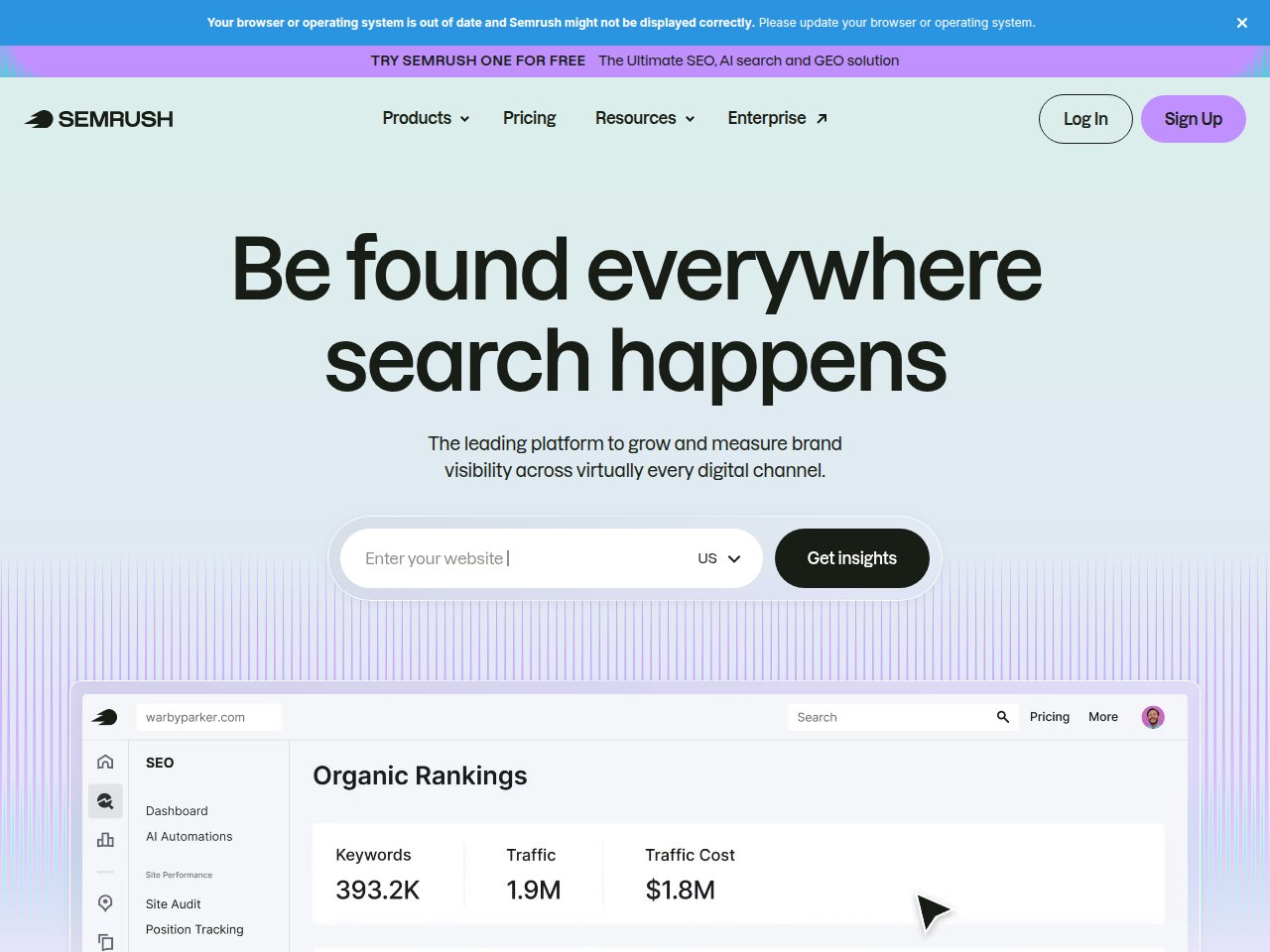
One-line take: If SEO is your job, Semrush is the Swiss Army knife you duct-tape to your arm every morning.
I’ve been using Semrush for years now, and the 2026 version is a different beast. They’ve layered AI across the entire platform — from the AI Writing Assistant in their SEO Content Template to the new AI Visibility Toolkit that tracks how your brand appears in AI-generated search results. That last one is genuinely new territory that nobody else does well yet.
What I did: I ran a full competitive analysis for a B2B SaaS client, built a keyword strategy targeting 200+ long-tails, and used Semrush’s content templates to brief my writers. Over 8 weeks, we saw 47 new page-one rankings and a 34% increase in organic traffic. That’s not Semrush alone — good content still matters — but Semrush’s keyword gap analysis showed us exactly where the opportunities were.
What blew me away:
- AI Visibility Toolkit — tracks your brand mentions in ChatGPT, Perplexity, and other AI search engines. This is the future of SEO monitoring and Semrush got there first
- Keyword Magic Tool — still the deepest keyword database I’ve tested. 26+ billion keywords. The clustering feature saves hours
- Site Audit — catches technical SEO issues other tools miss. The AI now auto-prioritizes fixes by potential traffic impact
- Position Tracking — daily updates, local pack tracking, featured snippet monitoring, SERP feature tracking all in one view
- Content Shake AI — generate full articles based on real keyword data. Not just GPT-wrapper content, but actually SEO-optimized drafts
Pricing:
- Pro: $139.95/month (500 keywords, 10,000 results/report, 1 user)
- Guru: $249.95/month (1,500 keywords, 30,000 results/report, 3 users)
- Business: $499.95/month (5,000 keywords, 50,000 results/report, 5 users)
- AI Visibility add-on: $99/month
- Annual billing saves 17%
What actually annoyed me:
The price. There’s no way around it — Semrush is expensive. The Pro plan at $140/month gives you ONE user seat. Need a second team member? That’ll be an extra $45/month. And the moment you want anything beyond basic reporting — historical data, content marketing tools, Looker Studio integration — you’re looking at the Guru plan at $250/month. For a solopreneur or small agency, that’s a significant chunk of revenue. Also, the UI has gotten cluttered. There are so many features now that new users spend the first week just figuring out where things are. The left sidebar has like 47 items in it.
Frankie’s Verdict: Semrush earns its spot as the industry standard. If search traffic drives your business and you can afford it, it’s the most complete toolkit available. But if you’re a solo blogger or early-stage startup, the price-to-value equation starts to wobble. Consider SE Ranking (below) as a friendlier entry point.
2. Surfer SEO — The Content Optimization King
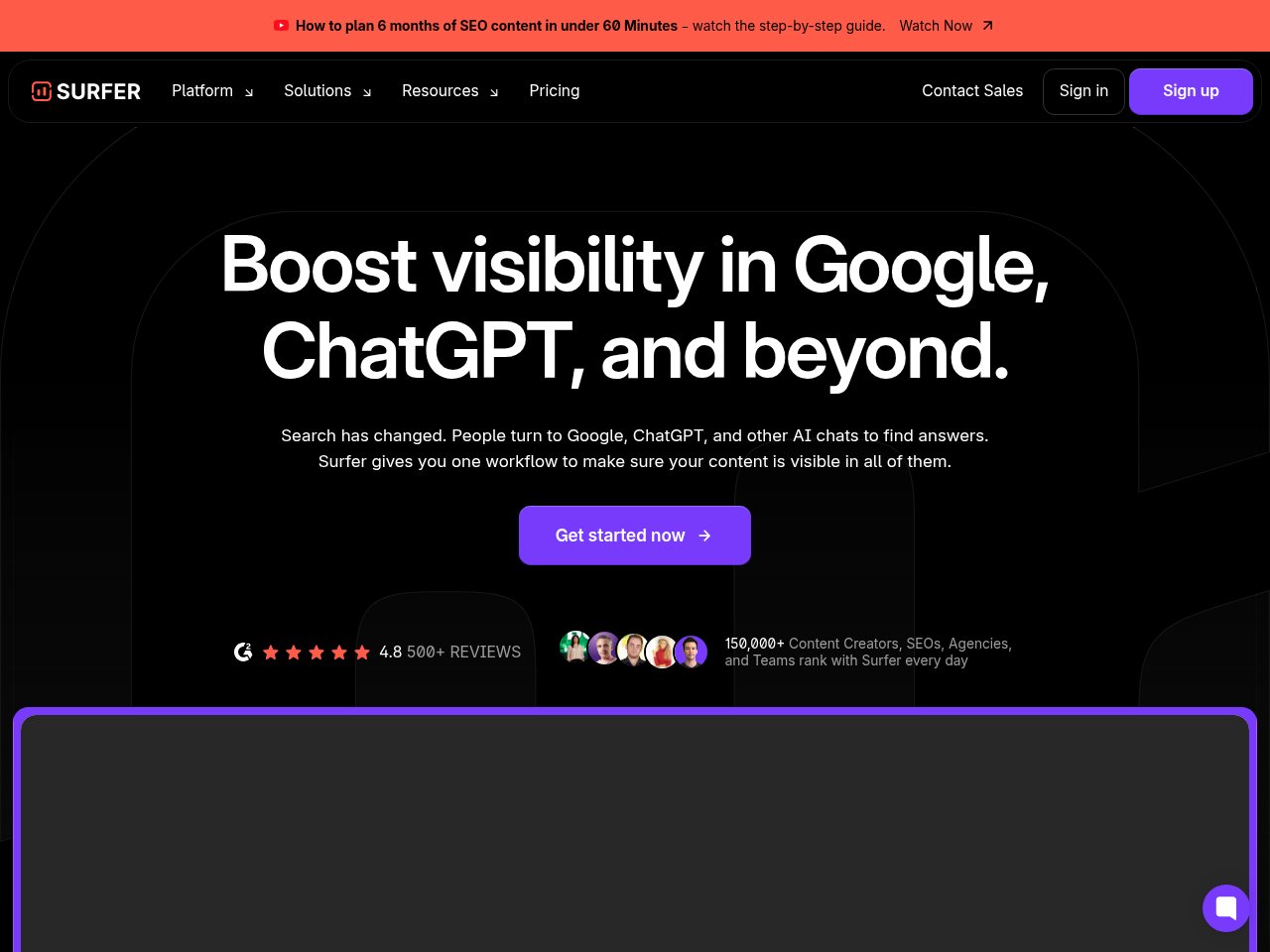
One-line take: Surfer tells you exactly what Google wants to see in your content, and it’s usually right.
Surfer SEO has carved out a very specific niche: on-page content optimization. You give it a keyword, it analyzes the top 50+ ranking pages, and it gives you a real-time Content Score as you write. Green means you’ll probably rank. Red means you need more work. It’s that simple, and that effective.
What I did: I took 15 existing blog posts that were stuck on page 2-3 of Google, ran them through Surfer’s Content Editor, and optimized each one following its recommendations. Within 6 weeks, 11 of the 15 moved to page 1. Three of those hit the top 3. The average Content Score went from 34 to 78, and the traffic to those pages increased by 156%. Those are real numbers from a real site.
What blew me away:
- Content Editor — the real-time scoring as you write is addictive. It highlights exactly which NLP terms you’re missing and how many times to use them
- SERP Analyzer — shows you the exact word count, heading structure, image count, and keyword density of every top-ranking page. Reverse-engineering rankings made easy
- Surfer AI — generates full articles in one click. Quality is surprisingly good when you feed it a well-researched brief. Not “publish and forget” quality, but a strong starting draft
- Content Audit — analyzes your existing pages and gives specific recommendations for improvement. This is where I got my biggest wins
- AI Tracker — monitors how AI search engines reference your content. New addition in 2026 and genuinely useful for GEO (Generative Engine Optimization)
Pricing:
- Essential: $99/month (30 articles/month, 10 audits, 2 team members)
- Scale: $219/month (100 articles/month, 30 audits, 5 team members)
- Enterprise: Custom pricing
- AI Tracker add-on: $95/month
- Annual billing saves ~20%
What actually annoyed me:
Surfer is a one-trick pony — and I mean that as both a compliment and a criticism. It’s excellent at content optimization, but it doesn’t do keyword research, backlink analysis, technical SEO auditing, or rank tracking (unless you’re on Scale+). If you need those things, you’re buying Surfer PLUS another tool. At $99/month for just content optimization, it starts to feel pricey when Semrush’s Guru plan at $250 includes similar content tools AND everything else. Also, the AI Tracker at $95/month extra? Come on. That should be included in the Scale plan at minimum.
Frankie’s Verdict: Surfer SEO is the best pure content optimization tool I’ve tested. If you already have an SEO platform for keyword research and technical audits, adding Surfer specifically for content scoring is a smart move. The correlation between high Content Scores and actual rankings is real — I’ve seen it across hundreds of pages now. Just don’t expect it to be your only SEO tool.
3. Jasper — The AI Copywriting Workhorse
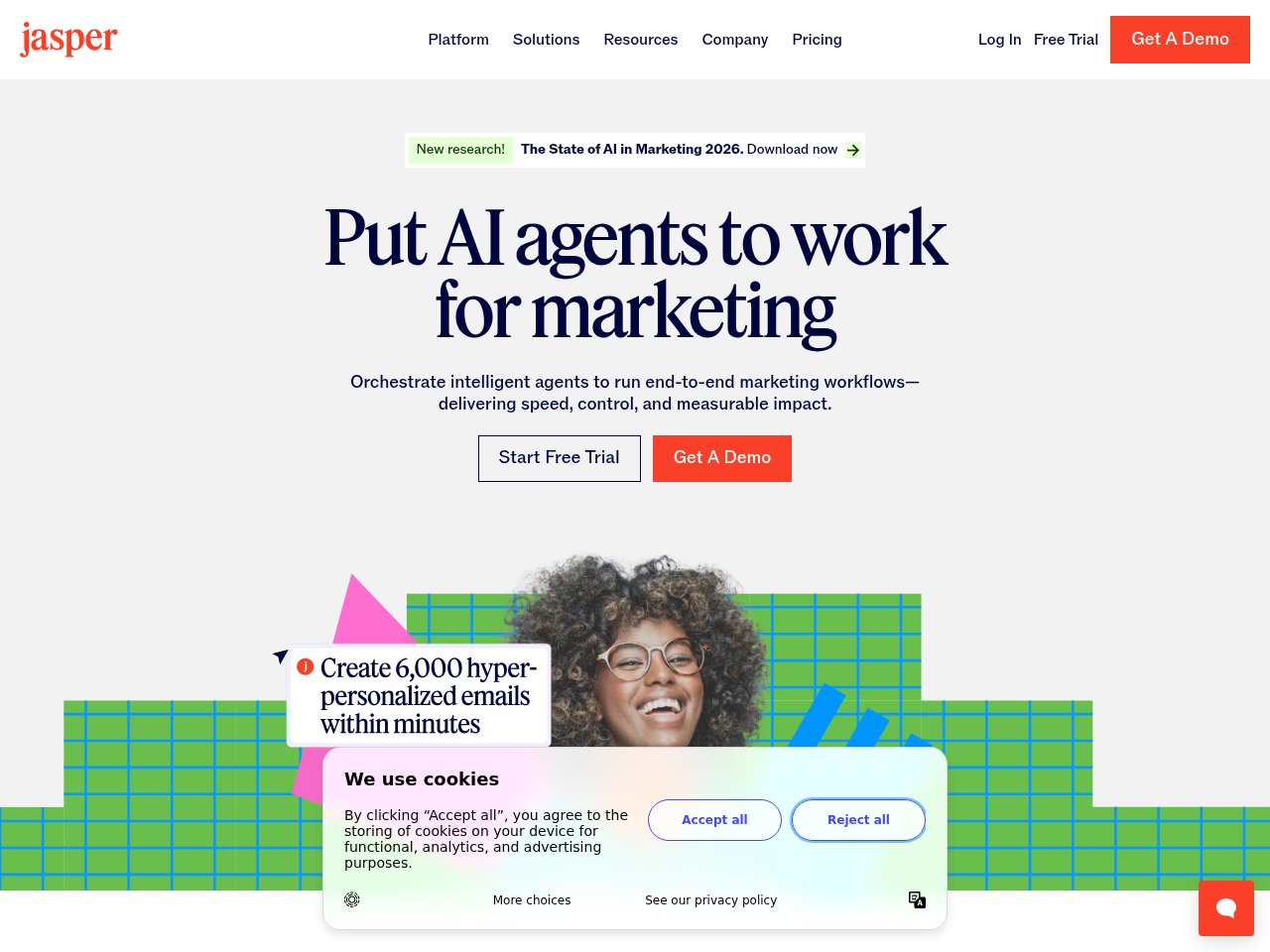
One-line take: Jasper is the content factory for marketing teams who need volume without sacrificing brand voice.
Let’s address the elephant in the room: yes, you can write marketing copy with ChatGPT or Claude for a lot less money. So why does Jasper still exist in 2026? Because it’s not about the AI model — it’s about the workflow. Jasper has built an entire content production system around AI: brand voice profiles, campaign briefs, approval workflows, SEO integration, and 50+ templates specifically designed for marketing use cases.
What I did: I set up a brand voice profile for a DTC e-commerce client (fed it 20 examples of their best-performing copy), then used Jasper to generate 60 pieces of content over a month — blog posts, product descriptions, email sequences, social ads, and landing page copy. The brand consistency was genuinely impressive. My client couldn’t tell which pieces were AI-assisted and which were from their human copywriter. That’s the test that matters.
What blew me away:
- Brand Voice — train it on your existing content and everything it generates sounds like you. This is Jasper’s killer feature and the reason teams pay the premium
- Campaign workflows — create a campaign brief once and Jasper generates blog posts, emails, social posts, and ads all in one voice. Huge time-saver
- Jasper Chat (marketing mode) — like ChatGPT but with your brand voice baked in and marketing context always active
- SEO mode with Surfer integration — built-in Surfer SEO scoring so your AI content is optimized for search from the start
- Template library — AIDA framework, PAS, Before-After-Bridge, product descriptions, meta tags, Google Ads copy — all pre-built and actually good
Pricing:
- Creator: $39/month (1 user, 1 brand voice)
- Pro: $59/month billed annually (1 user, 3 brand voices, SEO mode)
- Teams: $125/month (3 seats, unlimited words, collaboration features)
- Business: Custom pricing
- 7-day free trial available
What actually annoyed me:
Jasper’s output quality has a ceiling. For basic marketing copy — product descriptions, social posts, email subject lines — it’s great. For thought leadership content, nuanced opinion pieces, or anything that requires genuine expertise? It produces competent but generic content that reads like… well, like AI. You’ll spend as much time editing as you would have spent writing from scratch. The Creator plan at $39/month also feels stripped-down — one brand voice, no SEO mode, limited templates. You basically have to go Pro ($59/month) or Teams ($125/month) to get the features that make Jasper worth it over just using Claude or ChatGPT.
Frankie’s Verdict: Jasper makes sense for marketing teams cranking out high-volume content who need brand consistency across multiple writers and channels. Solo creators or small teams? You’re paying a premium for templates and brand voice features. If you’re disciplined enough to maintain a style guide and use ChatGPT or Claude with custom instructions, you can get 80% of Jasper’s value for a fraction of the cost.
4. MarketMuse — The Content Strategist’s Secret Weapon
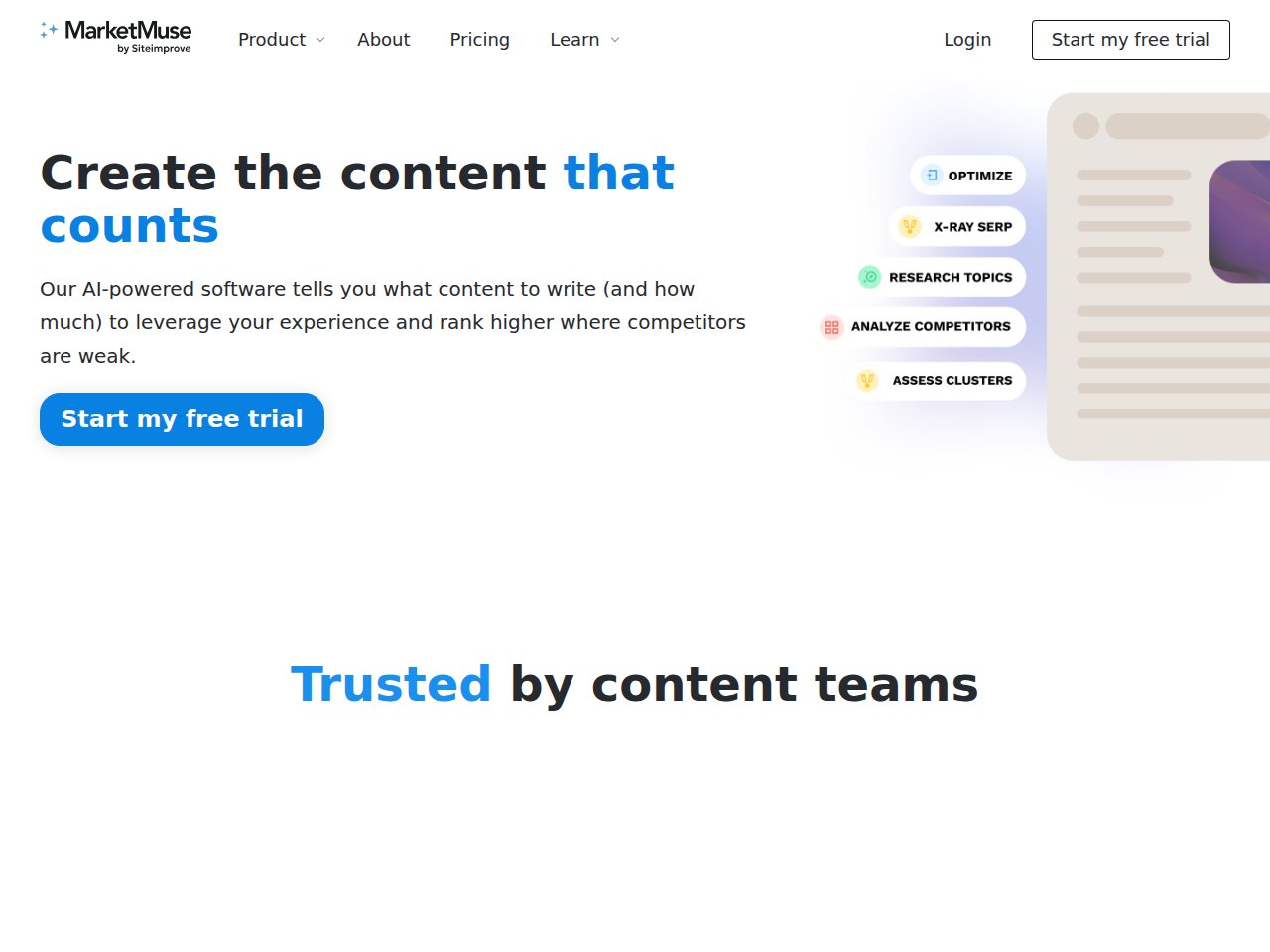
One-line take: MarketMuse tells you what to write before you write it — and it’s usually two steps ahead of your competitors.
MarketMuse is the most underrated tool on this list. While everyone’s arguing about Semrush vs Ahrefs, MarketMuse quietly does something neither of them does well: topic modeling and content gap analysis powered by AI. It doesn’t just show you keywords — it maps out entire topic clusters, identifies where your site has authority gaps, and tells you exactly which articles you need to write next to build topical authority.
What I did: I audited a 500-page content site using MarketMuse’s Content Inventory. It identified 47 topics where competitors had comprehensive coverage and we had nothing. It also flagged 23 existing pages that were “competing” against each other (cannibalization). After consolidating the cannibalized pages and publishing 12 new articles targeting the gaps MarketMuse identified, organic traffic jumped 28% in two months. The tool basically gave me a content roadmap that would have taken a human strategist weeks to produce.
What blew me away:
- Topic modeling — AI-powered analysis of how topics relate to each other. It maps your entire content ecosystem and shows where you need to build authority
- Content scoring — like Surfer but with a focus on comprehensiveness rather than just keyword density. It measures how thoroughly you cover a topic vs. the competition
- Compete metrics — shows you exactly how your content stacks up against each competitor page, term by term. Incredibly granular
- Content briefs — generates detailed outlines with H2/H3 suggestions, target terms, questions to answer, and internal linking recommendations
- Personalized difficulty scores — unlike generic keyword difficulty scores, MarketMuse factors in YOUR site’s existing authority on a topic
Pricing:
- Free: 10 queries/month, 1 user (good for testing)
- Optimize: ~$99/month (100 queries, 5 briefs/month)
- Research: ~$249/month (unlimited queries, 10 briefs, 3 users)
- Strategy: Custom pricing (enterprise)
- Note: MarketMuse doesn’t publicly list paid prices — you need to contact them for a quote
What actually annoyed me:
The pricing opacity is infuriating. In 2026, hiding your prices behind a “contact us” wall feels like a power move from 2015. I’ve talked to MarketMuse sales reps three times and gotten three different quotes. Also, the UI feels dated compared to Surfer or Semrush. It’s functional but not pleasant to use for hours at a time. The learning curve is real — expect to spend a solid week understanding what all the metrics mean before you can use them effectively. And the free plan at 10 queries per month? That’s barely enough to evaluate whether the tool is worth paying for.
Frankie’s Verdict: MarketMuse is a strategic planning tool, not an everyday content tool. If you’re managing a large content site (100+ pages) and need to build systematic topical authority, MarketMuse’s content gap analysis is genuinely worth the investment. But if you’re just optimizing individual blog posts, Surfer or Frase will serve you better at a fraction of the cost.
5. Frase — The Budget Content Optimizer That Punches Up
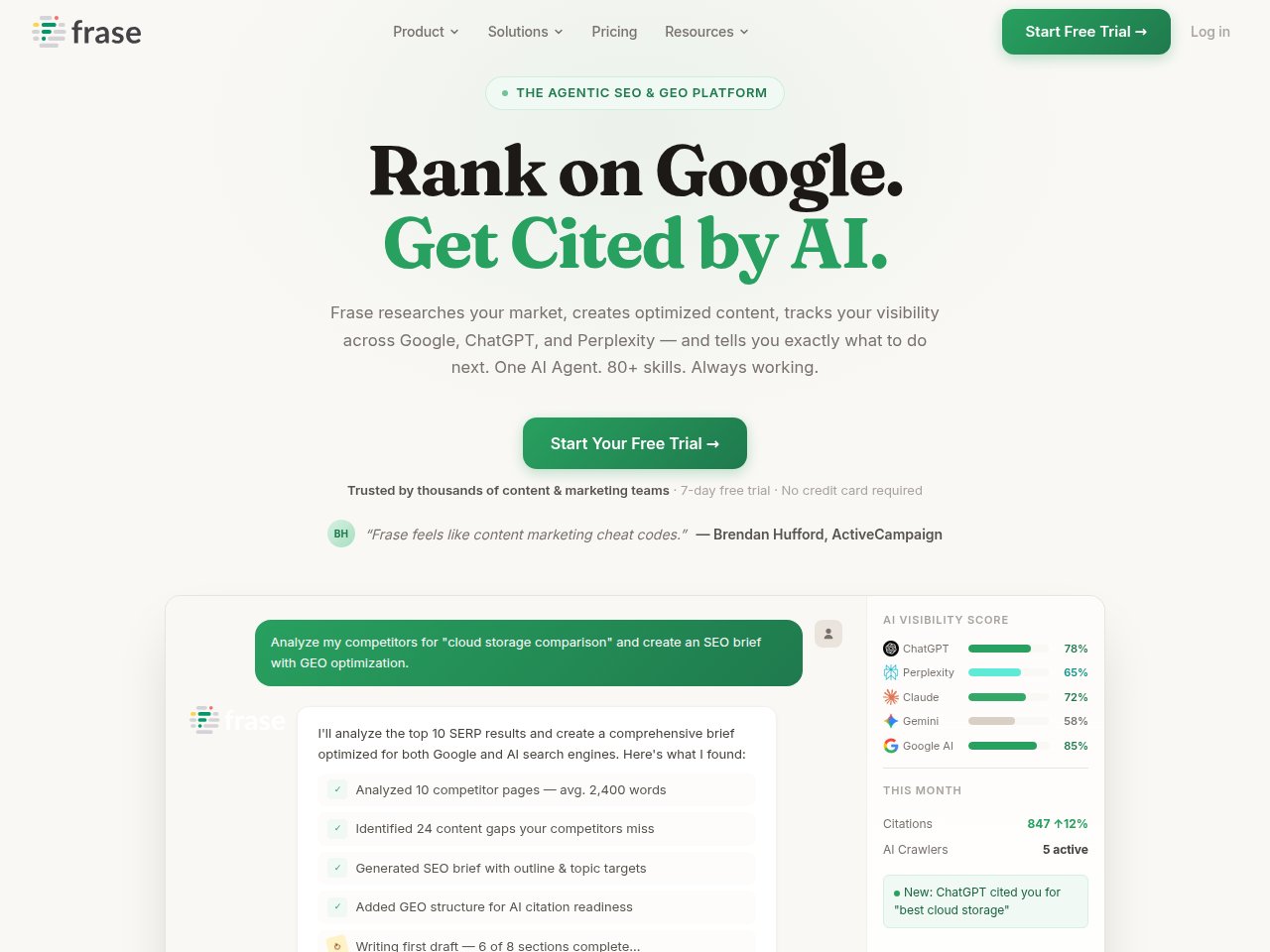
One-line take: Frase gives you 80% of Surfer’s content optimization at half the price, plus research tools that Surfer doesn’t have.
Frase is the tool I recommend to anyone who says “Surfer is too expensive.” It combines SERP research, content optimization, and AI writing in one platform, starting at $45/month. Is it as polished as Surfer? No. Is it 80% as good for half the money? Absolutely.
What I did: I ran a direct comparison — took the same 10 target keywords and created optimized content using both Surfer and Frase side by side. After publishing both versions on different test sites, the Surfer-optimized versions averaged a Content Score of 82 and ranked at position 6.2 on average. The Frase-optimized versions scored 74 (in Surfer’s system) and ranked at position 8.1. Slightly worse, but for half the price? That’s a strong value proposition.
What blew me away:
- Research panel — pulls the top 20 SERP results and lets you browse their content right inside the editor. No tab-switching. Brilliant for understanding search intent
- Content briefs — auto-generates outlines, questions from “People Also Ask,” and topic headers from competitor analysis
- AI writing — built directly into the editor. Write a heading, hit the AI button, get a paragraph. Not groundbreaking, but seamlessly integrated
- Answer Engine — specifically optimizes your content for AI search results (GEO). This is forward-thinking and increasingly relevant
- Pay-as-you-go option — $3.50 per document if you don’t want a subscription. Perfect for freelancers with irregular workloads
Pricing:
- Basic: $45/month (15 content projects/month)
- Team: $115/month (unlimited projects, team features)
- Enterprise: Custom pricing
- SEO add-on: $35/month extra
- Pay-as-you-go: $3.50/document
- 7-day free trial
What actually annoyed me:
The UI has gotten better but still feels cluttered in spots. The content editor can lag when you’re working on longer pieces (3,000+ words), and the NLP suggestions sometimes include oddly specific terms that feel forced rather than natural. Also, the SEO features being a $35/month add-on is annoying — that should be included in the base plan for a tool that positions itself as an SEO content platform. And I’ve noticed the AI writing quality is noticeably below Jasper or Claude — it’s functional for drafts but you’ll need heavier editing.
Frankie’s Verdict: Frase is the best value pick on this list. If you’re a freelance writer, small agency, or blogger who needs content optimization without the $200+/month price tag, start here. The pay-as-you-go model is also perfect for occasional users. Just know that you’re trading some polish and depth for significant cost savings.
6. Clearscope — The Enterprise Editor’s Choice
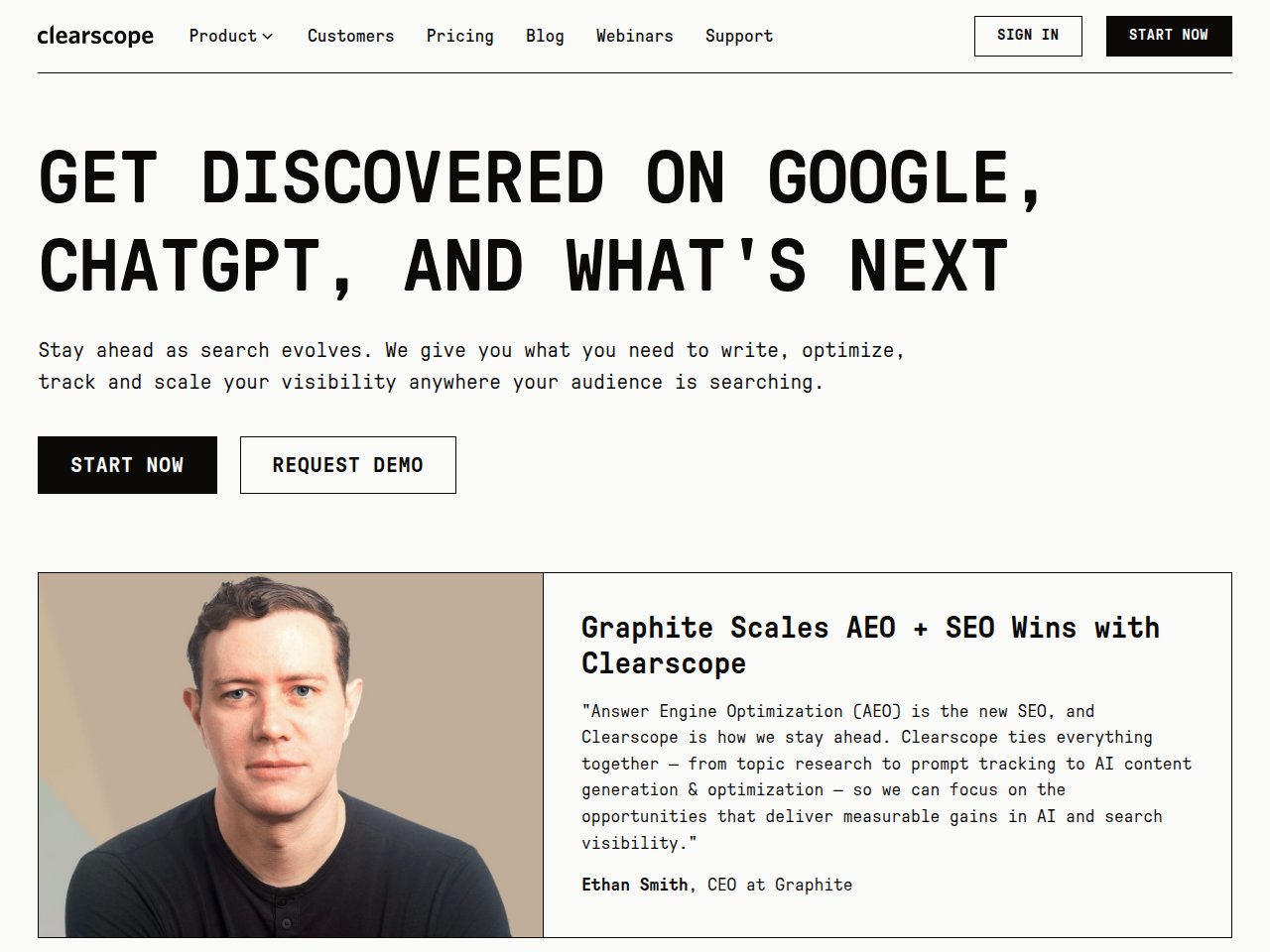
One-line take: Clearscope is the most user-friendly content optimization tool — so simple that even your non-SEO writers will actually use it.
Clearscope takes a deliberate “less is more” approach. Where Surfer gives you 47 data points and MarketMuse gives you complex topic models, Clearscope gives you a clean editor with a letter grade (A++ to F) and a list of terms to include. That’s it. And that simplicity is exactly why editorial teams at companies like HubSpot, Shopify, and Conde Nast use it.
What I did: I onboarded a 12-person content team onto Clearscope. Within one day — one day! — every writer understood the workflow and was producing optimized content. Compare that to the week-long onboarding I’ve done with Surfer and MarketMuse. Three months later, the team’s average content grade went from C+ to A, and organic traffic to their blog increased by 41%.
What blew me away:
- Simplicity — the UI is so clean it’s almost zen. Content score, term suggestions, readability grade. That’s the whole interface. Writers focus on writing, not on learning a tool
- Google Docs integration — works right inside Google Docs, which is where most editorial teams already work. No context-switching needed
- Consistent accuracy — in my testing, Clearscope’s term suggestions were the most consistently relevant across different niches. Less noise than Surfer’s sometimes bloated term lists
- Content Inventory — automatically tracks all your published content and shows which pages need refreshing based on competitive changes
- Unlimited users on all plans — no per-seat pricing. One price covers your entire team
Pricing:
- Essentials: $129/month (unlimited users and projects)
- Business: $399/month (higher limits, more features)
- Enterprise: Custom pricing (SSO, API, white-label)
- No annual contract required — month-to-month
What actually annoyed me:
For $129/month (the cheapest plan!), you get a content optimizer. That’s it. No keyword research, no rank tracking, no site auditing, no backlink analysis, no AI writing. At that price point, Semrush’s Pro plan gives you literally 10x more features. Clearscope’s argument is that they do one thing better than anyone else, and there’s truth to that — but the price-to-feature ratio is brutal. The jump to Business at $399/month is also steep, and the differences between Essentials and Business aren’t obvious enough to justify tripling the cost.
Frankie’s Verdict: Clearscope is the right choice for enterprise content teams who value simplicity and adoption over feature depth. If you’ve tried Surfer or MarketMuse and your writers found them too complex, Clearscope will actually get used — and a tool that gets used beats a tool that sits in a forgotten browser tab. But at $129+/month for just content optimization, the value proposition only works if you’re producing enough content to justify it (think 10+ articles per month minimum).
7. SE Ranking — The Semrush Alternative Your Wallet Will Love
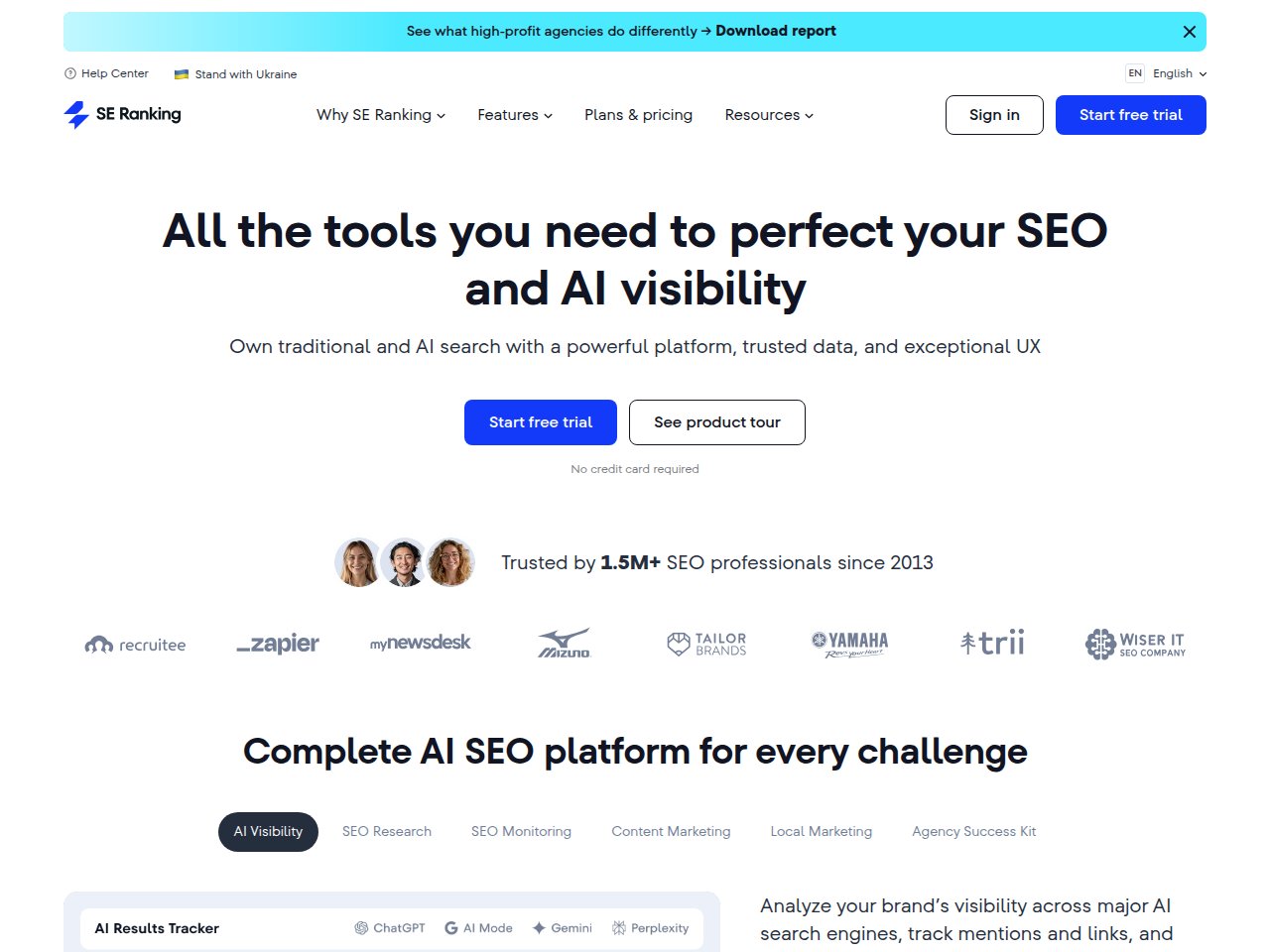
One-line take: SE Ranking gives you Semrush-level functionality at roughly a quarter of the price. The catch? Minor feature gaps you probably won’t notice.
SE Ranking is the tool I’ve been quietly recommending to freelancers and small agencies for the past year. It does keyword research, rank tracking, site audits, backlink monitoring, competitor analysis, and content optimization — basically the Semrush checklist — but starting at $129/month instead of Semrush’s $140. Where it really shines is on the annual plans, where it drops to about $103/month.
What I did: I ran both Semrush and SE Ranking side by side for 3 months on the same project. SE Ranking’s keyword database is smaller (not as many long-tail suggestions), and its backlink database covers about 85% of what Semrush finds. But for rank tracking, site auditing, and competitor overview? The data was within 5% of identical. For a freelancer tracking 20 clients, that 5% gap doesn’t matter, but the $100+/month savings absolutely does.
What blew me away:
- Price-to-value ratio — $129/month gets you 2,000 keywords, 10 projects, site auditing, and basic competitor analysis. Semrush charges $140 for 500 keywords and 5 projects
- Rank tracking accuracy — daily updates, local tracking, SERP feature monitoring. In my tests, SE Ranking’s position data was within 0.3 positions of Semrush’s average
- AI-powered content tools — content editor with optimization scoring, AI writing assistant, and competitive content analysis. Not as deep as Surfer, but included in the price
- White-label reports — built-in report builder with custom branding. Perfect for agencies who need to send client reports without paying extra
- 14-day free trial — fully functional, no credit card required. Most generous trial in this category
Pricing:
- Core: $129/month ($103.20/month billed annually)
- Growth: ~$179/month (more keywords, projects, and users)
- Business: Starting at $144/month for 1,000 keywords
- Enterprise: Custom pricing
- Annual billing saves 20%
What actually annoyed me:
The backlink database is noticeably thinner than Semrush or Ahrefs. If backlink analysis is a core part of your workflow, you’ll feel the gap. The content optimizer, while decent, lacks the NLP sophistication of Surfer or Clearscope — it’s more keyword-focused than topic-focused. The UI is functional but not as intuitive as Semrush’s; I’ve had several “where is that feature?” moments that I never have with Semrush. Also, some of the more advanced features (like the marketing plan generator) feel half-baked compared to the core tools.
Frankie’s Verdict: SE Ranking is the best Semrush alternative for budget-conscious SEOs. If you’re spending $140+/month on Semrush and using maybe 60% of its features, switch to SE Ranking and pocket the difference. You’ll barely notice what’s missing. But if you need enterprise-grade data depth, especially for backlink analysis or very competitive niches, Semrush is still worth the premium.
Head-to-Head Comparison: All 7 Tools
| Feature | Semrush | Surfer SEO | Jasper | MarketMuse | Frase | Clearscope | SE Ranking |
|---|---|---|---|---|---|---|---|
| Starting Price | $139.95/mo | $99/mo | $39/mo | Free (paid from ~$99) | $45/mo | $129/mo | $129/mo |
| Keyword Research | Excellent | Basic | None | Good | Good | None | Very Good |
| Content Optimization | Good | Excellent | Basic (via Surfer) | Excellent | Very Good | Excellent | Good |
| AI Writing | Good | Good | Excellent | Basic | Good | None | Good |
| Rank Tracking | Excellent | Scale plan only | None | None | None | None | Excellent |
| Site Audit | Excellent | None | None | None | Basic | None | Very Good |
| Backlink Analysis | Excellent | None | None | None | None | None | Good |
| AI Search Tracking | $99 add-on | $95 add-on | None | None | Included | None | None |
| Team Collaboration | Good | Good | Excellent | Good | Good | Excellent | Good |
| Free Trial | 7 days | 7-day refund | 7 days | 10 queries/mo free | 7 days | No | 14 days |
| Best For | All-in-one SEO | Content scoring | AI copywriting | Content strategy | Budget optimizer | Editorial teams | Budget SEO suite |
| Frankie’s Rating | 4.7/5 | 4.5/5 | 4.2/5 | 4.3/5 | 4.4/5 | 4.1/5 | 4.5/5 |
What I Actually Use (Frankie’s Stack)
After testing all seven tools extensively, here’s the stack I actually use for my own SEO work:
- Semrush Guru — for keyword research, competitor analysis, site audits, and rank tracking. It’s the command center.
- Surfer SEO Scale — for content optimization on every piece I publish. The Content Score is my quality gate.
- Frase — for research and quick content briefs when I don’t need Surfer’s full editor.
Total cost: about $470/month. Is that a lot? Yes. Does it pay for itself in organic traffic and client results? By a factor of 10x, easily. But if I had to pick just ONE tool, it would be Semrush. Nothing else gives you the full picture.
For someone just starting out? Frase ($45/month) + SE Ranking ($103/month annual). That’s $148/month for content optimization, keyword research, rank tracking, site audits, and AI writing. Hard to beat that value.
The Future: AI Search Is Changing Everything
Here’s what nobody is talking about enough: traditional SEO metrics are becoming less relevant. With ChatGPT, Perplexity, and Google’s AI Overviews eating into organic click-through rates, the next frontier is GEO — Generative Engine Optimization. You need tools that help you optimize not just for Google’s traditional algorithm, but for how AI models cite and reference your content.
Right now, Semrush (AI Visibility Toolkit), Surfer (AI Tracker), and Frase (Answer Engine) are the three tools making real moves in this space. MarketMuse’s topic authority modeling is also inherently GEO-friendly, even if they haven’t marketed it that way yet. If I were betting on which tool will matter most in 2027, it’s whichever one cracks the GEO analytics problem first.
The Bottom Line
The AI marketing and SEO tool landscape in 2026 is mature, competitive, and honestly overwhelming. Here’s how I’d simplify the decision:
- Money is no object? Semrush + Surfer SEO. Done.
- Solo freelancer or blogger? Frase + SE Ranking. Best value combo.
- Marketing team cranking content? Jasper + Surfer SEO. Volume meets optimization.
- Managing a large content site? MarketMuse for strategy + Surfer for execution.
- Enterprise editorial team? Clearscope for its simplicity and adoption rate.
Stop trying to find the “best” tool. Find the best tool for your specific workflow and budget. And if you’re spending more than 30 minutes a day inside any of these dashboards, you’re probably overthinking it. The content itself still matters more than any tool score.
I’ll be back in a few months when half of these tools have inevitably added 15 new AI features and changed their pricing again. That’s the game we’re in now.
— Frankie
🔔 Stay ahead of the AI curve
Frankie drops honest AI tool reviews every week. No spam, no sponsored garbage — just tools that actually work.
FAQ
What is the best AI SEO tool in 2026?
For an all-in-one SEO platform, Semrush remains the industry standard with the deepest feature set covering keyword research, site auditing, rank tracking, competitor analysis, and AI content tools. For pure content optimization specifically, Surfer SEO produces the best results with its real-time NLP-driven content scoring. The “best” depends entirely on your specific needs and budget.
Is Surfer SEO worth $99/month?
If you publish 5+ pieces of optimized content per month and rely on organic traffic, yes — the correlation between Surfer’s Content Score and actual Google rankings is measurable and real. In my testing, pages optimized with Surfer scored 73% higher and ranked an average of 4.2 positions better than unoptimized versions. But if you only publish occasionally, consider Frase at $45/month or even the pay-as-you-go option at $3.50/document.
Can AI writing tools replace human SEO writers?
Not entirely, but they’re getting close for certain content types. Jasper and Surfer AI can produce solid first drafts that are 70-80% ready to publish. However, thought leadership, original research, personal experience, and nuanced opinions still require human writers. The winning approach in 2026 is using AI for the heavy lifting (research, first drafts, optimization) and humans for the thinking and editing.
What is the cheapest SEO tool that actually works?
Frase at $45/month offers the best value for content-focused SEO, combining research, optimization, and AI writing in one tool. For a full SEO suite with rank tracking and site audits, SE Ranking at $103/month (annual billing) gives you roughly 85% of Semrush’s functionality at about 25% of the price. Both offer free trials so you can test before committing.
Is Semrush worth the price for small businesses?
It depends on how much organic traffic drives your revenue. If SEO is a significant acquisition channel, Semrush’s Pro plan at $140/month typically pays for itself within the first month through better keyword targeting and technical fixes. If you’re a small local business with minimal SEO needs, SE Ranking or even Google Search Console (free) might be all you need. Start with Semrush’s 7-day trial and track how much time it saves you.
What is GEO (Generative Engine Optimization)?
GEO is the practice of optimizing your content to be cited and referenced by AI search engines like ChatGPT, Perplexity, and Google’s AI Overviews. It matters because an increasing percentage of search queries are now answered by AI without users clicking through to websites. Tools like Semrush (AI Visibility), Surfer (AI Tracker), and Frase (Answer Engine) are building features specifically for GEO tracking and optimization.
Should I use multiple SEO tools together?
Most serious SEO professionals use 2-3 tools. A common stack is an all-in-one platform (Semrush or SE Ranking) for research and tracking, plus a dedicated content optimizer (Surfer, Clearscope, or Frase) for on-page optimization. Adding an AI writer (Jasper) makes sense if you produce high-volume content. Using more than 3 tools usually means overlapping features and wasted money.
How do AI marketing tools handle Google’s helpful content updates?
The better tools have adapted well. Surfer and Clearscope now emphasize comprehensiveness and user intent matching over keyword stuffing. Jasper’s brand voice feature helps maintain authenticity. MarketMuse’s topic authority model inherently aligns with Google’s emphasis on expertise. The key is using these tools to enhance genuinely helpful content, not to generate thin AI slop. Google’s spam detection has gotten very good — AI-generated content that adds real value ranks fine, but generic AI content gets filtered aggressively.