Best AI Video Generators 2026: Sora vs Runway vs HeyGen (I Made 100+ Videos With Each)
Last updated: March 2026 — March 2026: Initial publication with hands-on testing of 7 AI video generators including Runway Gen-4, Sora 2, and HeyGen. | By Frankie
Short answer: Runway is the best overall AI video generator for most creators in 2026. It has the most complete toolset, Gen-4 quality is insane, and the credit system actually makes sense once you learn it. But if you need AI avatar talking-head videos, HeyGen wins that category by a mile. And if you just want to watch your jaw drop, Sora produces the most visually stunning clips I’ve ever seen from a text prompt.
I spent the last two months generating over 100 videos on each of these seven platforms. My electricity bill hates me. My partner thinks I’ve developed an unhealthy obsession with watching AI-generated cats do backflips. But what I got out of it is the most exhaustive, honest comparison of AI video generators you’ll find in 2026.
Let me walk you through every single one.
📑 Table of Contents
Quick Verdict: Best AI Video Generator by Use Case (2026)
| Use Case | Best Pick | Why |
|---|---|---|
| Best overall for creators | Runway (Gen-4) | Most complete platform, great quality, full editing suite |
| Most jaw-dropping quality | Sora 2 | OpenAI’s physics engine is unmatched for realism |
| AI avatar / talking head videos | HeyGen | Best avatars, lip sync, 40+ language translation |
| Enterprise training videos | Synthesia | 230+ avatars, 140 languages, SOC 2 compliant |
| Best free option | Kling AI | 66 free credits daily, up to 3-min videos, solid quality |
| Creative / viral effects | Pika | Pikaswaps and weird effects that go viral on TikTok |
| Full video production from text | InVideo AI | Script + stock footage + voiceover + editing in one prompt |
📖 Related reviews: Best AI Image Generators 2026 · Best AI Music Generators 2026
🔔 Stay ahead of the AI curve
Frankie drops honest AI tool reviews every week. No spam, no sponsored garbage — just tools that actually work.
The Big 7 AI Video Generators: Full Reviews
1. Runway (Gen-4) — The Creator’s Swiss Army Knife

Let’s start with my overall winner. Runway isn’t just a video generator — it’s an entire AI creative suite that happens to have the best text-to-video engine on the market right now. Gen-4, which dropped in late 2025 alongside the even faster Gen-4 Turbo, is genuinely impressive. Character consistency across scenes? Finally solved. Camera movements that make sense? Check. And the new “Aleph” feature lets you edit generated videos with text prompts after the fact — like saying “add rain to this scene” and watching it happen.
I generated 127 videos across every style I could think of: cinematic landscapes, product demos, abstract art pieces, talking animals (don’t judge me), and even a fake movie trailer. Gen-4 nailed about 85% of them on the first or second attempt. That’s a massive improvement over Gen-3, where I was lucky to get 60% usable output.
What blew me away:
- Character consistency — reference images now maintain the same face, clothes, and posture across multiple generations. This was THE missing feature for months.
- Gen-4 Turbo speed — what used to take 2-3 minutes now renders in under 30 seconds. I nearly fell off my chair.
- Aleph in-video editing — post-generation text editing is a game-changer. “Change the lighting to golden hour” and boom, it just works.
- Image-to-video quality — feed it a still photo and watch it animate with natural camera movement. The spatial understanding is top-tier.
Pricing:
- Free: 125 one-time credits (burns through fast)
- Standard: $12/mo — 625 credits, no watermark
- Pro: $28/mo — 2,250 credits, custom AI voices, priority rendering
- Unlimited: $76/mo — unlimited generations (yes, really)
- Enterprise: custom pricing
What actually annoyed me:
The free tier is basically a tease. 125 credits sounds okay until you realize a single 10-second Gen-4 video eats 40-50 credits. So you get maybe 2-3 videos before you’re staring at a paywall. The credit system in general is confusing at first — different models, different resolutions, different costs. I had to make a spreadsheet just to figure out my per-video costs. Also, Gen-4 Turbo is faster but noticeably lower quality than standard Gen-4. You’re trading fidelity for speed, and Runway doesn’t make that tradeoff obvious enough.
Frankie’s Verdict: Runway is the most complete AI video platform, period. If you’re only paying for one AI video tool, make it this one. The Pro plan at $28/mo hits the sweet spot between price and capability. Gen-4 + Aleph editing is the closest thing to an “AI video studio” that exists today.
2. Sora 2 — The Jaw-Dropper That’s Hard to Actually Use
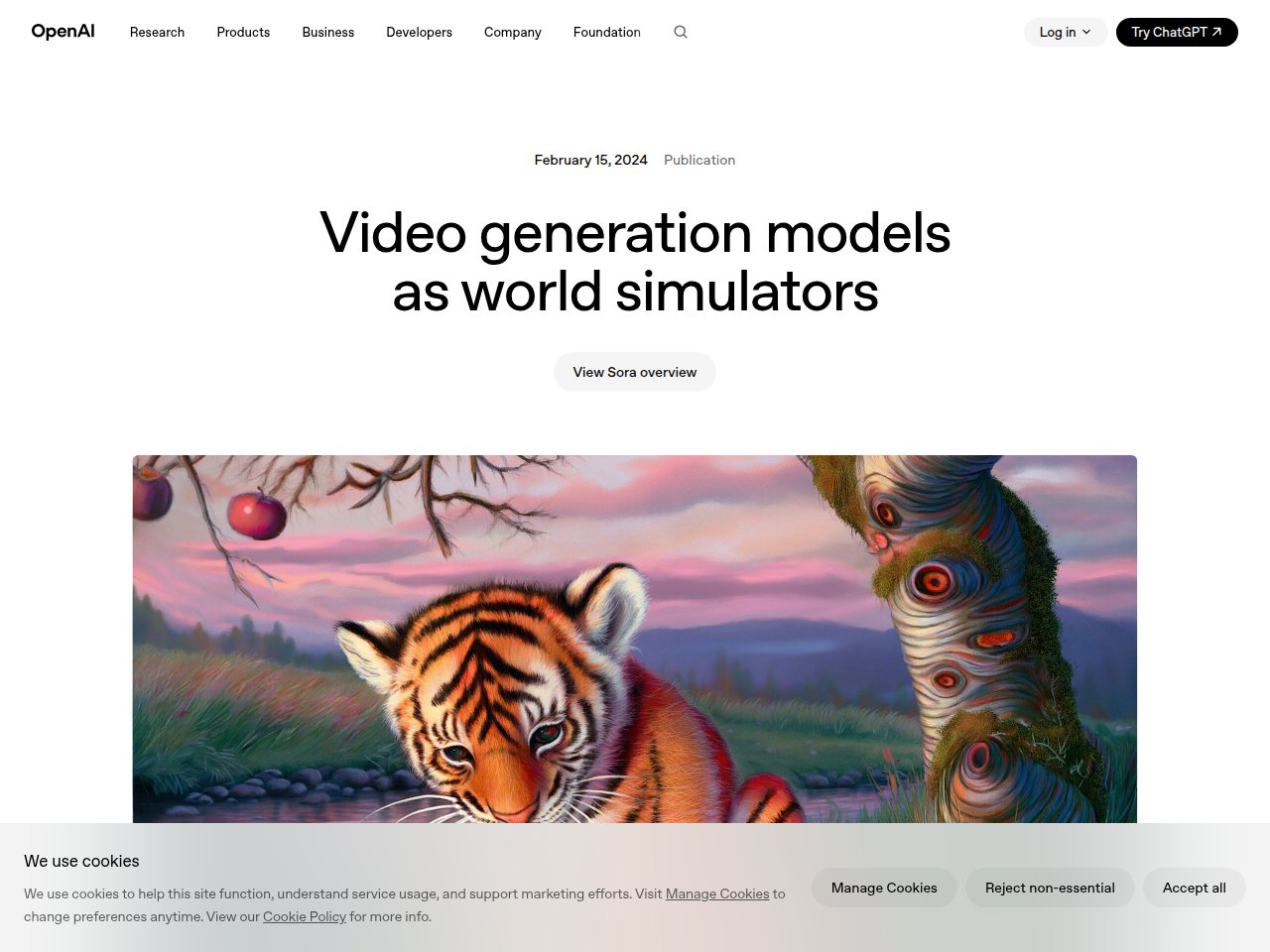
Oh, Sora. The tool that broke the internet when OpenAI first demoed it, then took forever to actually launch, and now sits in this weird space where it produces the most beautiful AI videos you’ve ever seen but is trapped behind ChatGPT’s subscription tiers.
Let’s be real: Sora 2’s visual quality is unmatched. The physics simulation, the way light plays on surfaces, the natural motion of fabric and water — it’s genuinely stunning. I generated a video of a golden retriever running through autumn leaves, and my friend literally asked me where I filmed it. That’s the level we’re talking about.
But here’s the problem: actually using Sora for production work is a headache.
What blew me away:
- Physics realism — water, cloth, hair, and smoke all behave like they should. No other tool comes close.
- 1080p output at 25 seconds on Pro tier — that’s decent clip length for social media
- Synchronized audio generation — Sora 2 now generates dialogue and sound effects alongside the video. Holy crap.
- “Cameos” feature — upload a photo of yourself and get inserted into AI scenes. Creepy and amazing in equal measure.
Pricing:
- ChatGPT Plus: $20/mo — 1,000 credits, 720p, watermarked, 5-sec max
- ChatGPT Pro: $200/mo — 10,000 credits, 1080p, no watermark, 25-sec max
- API: per-generation pricing (varies by resolution/duration)
What actually annoyed me:
Where do I start? The Plus tier at $20/mo gives you watermarked 720p videos capped at 5 seconds. FIVE SECONDS. That’s barely enough for a TikTok transition. To get anything usable, you need the $200/mo Pro plan, which is insane for most individual creators. The content policy is also frustratingly restrictive — I got blocked trying to generate a perfectly innocent cooking scene because it involved a knife. And the lack of image-to-video means you can’t build on existing assets the way you can with Runway. It’s text-only-in, which limits your creative control significantly.
Frankie’s Verdict: Sora produces the most visually stunning AI video on the planet. But the pricing structure and limitations make it impractical for most people. If you already pay for ChatGPT Pro for other reasons, Sora is a fantastic bonus. Otherwise, Runway gives you 90% of the quality at a fraction of the cost with way more control.
3. HeyGen — The AI Avatar King
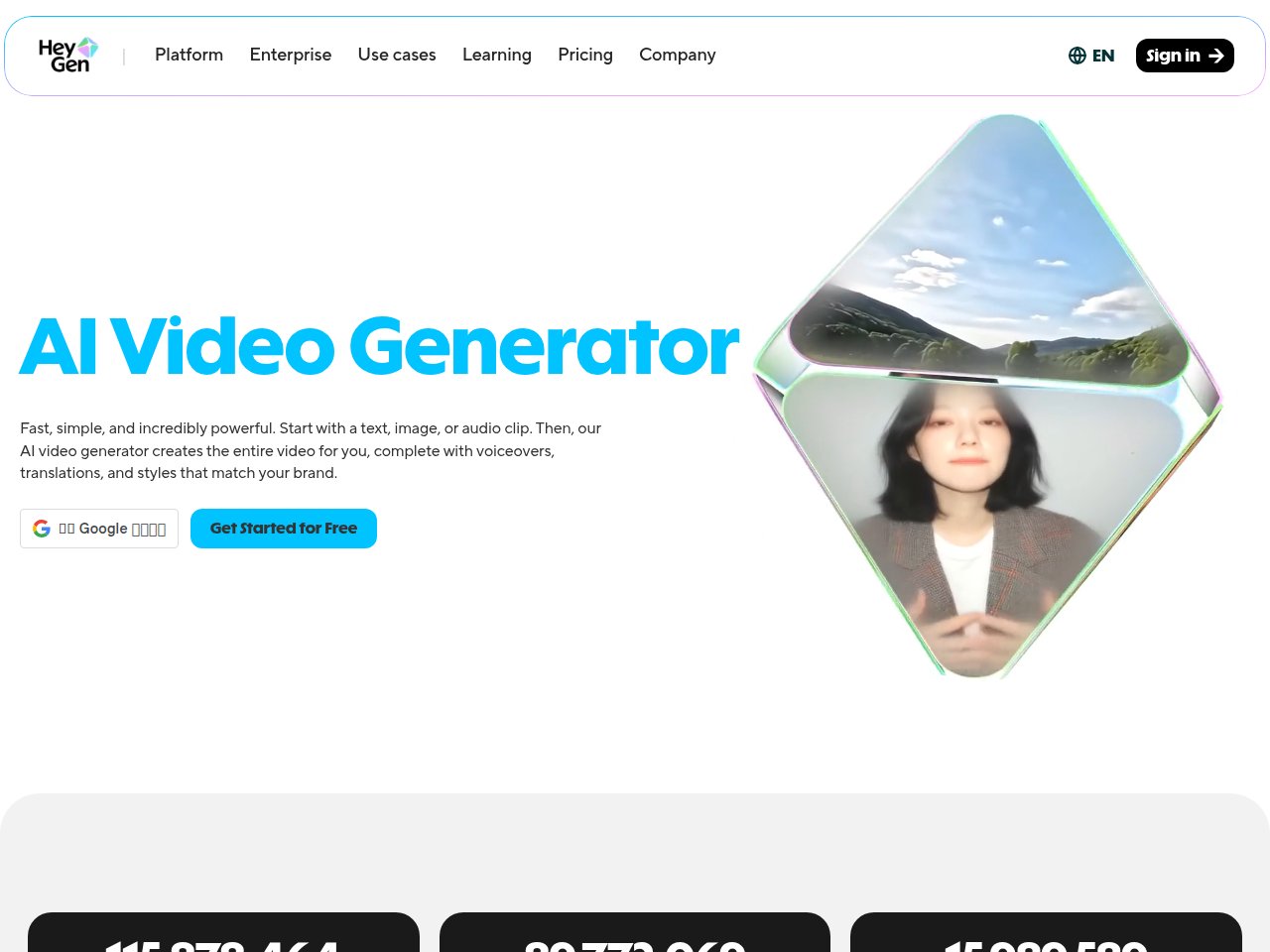
HeyGen isn’t competing with Sora or Runway — it’s playing a completely different game. While those tools generate creative video from text, HeyGen specializes in AI avatar talking-head videos. And holy hell, it’s good at it.
If you need a professional-looking person delivering a script on camera, HeyGen produces results that are getting genuinely difficult to distinguish from real footage. Their Avatar IV system is a massive leap forward — natural head movements, realistic blinking patterns, and lip sync that actually matches the words (in 40+ languages, which is the real killer feature).
I tested it by creating the same 2-minute product explainer video in English, Spanish, Mandarin, and German. The translation + lip sync feature is nothing short of magic. Same avatar, same gestures, perfectly synced lip movements in each language. My Mandarin-speaking colleague said the lip sync was “eerily accurate.”
What blew me away:
- Avatar IV quality — the uncanny valley is getting very narrow. These look like real people on a webcam.
- Instant video translation with lip sync — record once, publish in 40+ languages. Marketing teams, listen up.
- Custom avatar creation — turn yourself into an AI avatar with a 5-minute recording session
- Template library — hundreds of pre-built templates for sales, training, social media
Pricing:
- Free: 3 videos/month, 3-min max, 720p, watermarked
- Creator: $29/mo ($24/mo annual) — unlimited videos up to 30 min
- Business: $149/mo — 60-min videos, team collaboration, SSO
- Enterprise: custom (typically $500-2,000+/mo)
What actually annoyed me:
The “Premium Credits” system is a sneaky gotcha. Your Creator plan says “unlimited videos” but Avatar IV, lip-synced translation, and other advanced features eat Premium Credits that are limited per month. So you might have “unlimited” basic avatar videos but run out of credits for the features you actually want. I hit my credit ceiling halfway through month one and had to upgrade. Also, creating a custom avatar requires a specific lighting setup and script recording process that took me about 3 hours to get right. Not exactly the “5 minutes” they advertise.
Frankie’s Verdict: HeyGen is the undisputed king of AI avatar videos. If your use case is talking-head content — sales videos, training, personalized outreach, multilingual content — nothing else comes close. Just budget for the Business plan if you need the premium features, because the Creator plan’s credit limits will frustrate you.
4. Synthesia — The Enterprise Workhorse
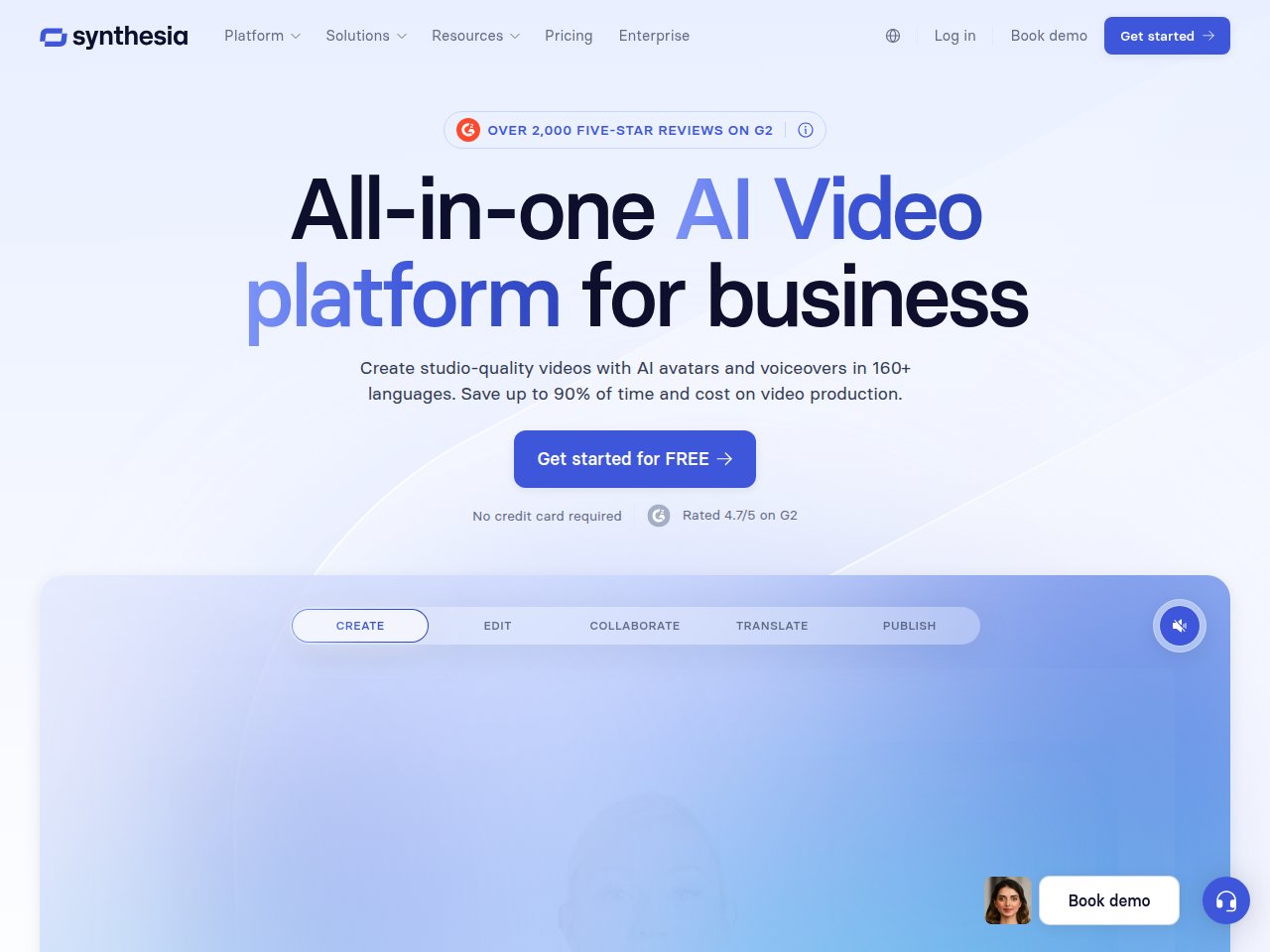
If HeyGen is the cool startup, Synthesia is the buttoned-up enterprise sibling. It does a lot of the same things — AI avatars, text-to-video, multilingual support — but everything is designed for corporate environments. SOC 2 compliance, brand kits, bulk video personalization, SCORM export for LMS integration. If those acronyms mean something to you, Synthesia is probably your tool.
I tested Synthesia’s corporate training workflow specifically: creating a 15-minute onboarding video with slides, avatar presenter, chapter markers, and interactive quizzes. It handled the whole thing smoothly. The avatar quality isn’t quite as cutting-edge as HeyGen’s Avatar IV, but it’s absolutely professional enough for internal company use.
What blew me away:
- 230+ stock AI avatars representing diverse ethnicities, ages, and styles
- 140 language support — more than HeyGen by a significant margin
- AI Screen Recording — record your screen, and Synthesia generates a polished tutorial with an avatar presenter
- Bulk personalization — create 1,000 personalized videos from a single template + CSV file
Pricing:
- Free: 3 minutes/month, 6 avatars
- Starter: $18/mo (annual) — 10 min, 125+ avatars
- Creator: $64/mo (annual) — 30 min, 180+ avatars, 5 personal avatars
- Enterprise: custom pricing
What actually annoyed me:
The minute-based pricing is brutal for longer content. 10 minutes per month on the Starter plan? That’s one training video. If you need to produce content at any real volume, you’re looking at Creator ($64/mo) minimum, and even that 30 minutes goes fast when you’re iterating on scripts. Also, Synthesia’s avatars — while professional — feel noticeably more “AI” than HeyGen’s latest Avatar IV. There’s a stiffness to the gestures that screams “this isn’t a real person” to anyone paying attention. For internal training videos, that’s fine. For customer-facing content? Maybe not.
Frankie’s Verdict: Synthesia is the right choice for L&D teams, HR departments, and enterprise video production at scale. It’s not the flashiest tool, but it’s reliable, compliant, and does exactly what corporate buyers need. If you’re an individual creator, skip this and go HeyGen.
5. Kling AI — China’s Silent Powerhouse

Don’t sleep on Kling AI. Made by Kuaishou (China’s answer to TikTok), this thing went from “never heard of it” to “$240 million annual revenue” in 19 months. And after testing it extensively, I understand why.
Kling AI 2.6 generates video with synchronized audio — voiceover, dialogue, sound effects, and ambient sounds all generated in a single pass. The video quality rivals Sora in many scenarios, and the free tier is the most generous in the entire market. 66 free credits per day. Per DAY. Not per month. That alone makes it worth trying.
I used Kling to generate a series of 30-second mini-documentaries about street food in different cities. The results were stunning — sizzling sounds, ambient chatter, natural camera movements. Not perfect, but jaw-droppingly good for a free tool.
What blew me away:
- 66 free daily credits — the most generous free tier in AI video, period
- 3-minute max video length — longest output of any AI video generator
- Simultaneous audio-visual generation (Kling 2.6) — video + sound in one generation pass
- 1080p HD output even on Pro plan ($37/mo)
Pricing:
- Free: 66 credits/day (enough for 1-2 short clips daily)
- Standard: $10/mo — more credits, no watermark
- Pro: $37/mo — 1080p, priority rendering, more control
- Premier: $92/mo — maximum credits, fastest queue
What actually annoyed me:
The interface is clearly designed for the Chinese market first and localized for international users second. Some tooltips are still in Chinese, the UX logic is different from Western tools, and the documentation is thin. I also hit a few prompts where cultural differences in training data were obvious — it generates Asian faces and environments more naturally than Western ones (which makes sense given the training data, but is worth noting). And while 66 daily credits sounds amazing, “Professional Mode” videos eat 70 credits each, so you’re really getting about one free video per day in decent quality.
Frankie’s Verdict: Kling AI is the best value in AI video generation right now. The free tier alone is worth it for experimentation. If you’re comfortable with the interface quirks, the Pro plan at $37/mo gives you quality that competes with tools charging 2-3x more. This is the underdog I’m rooting for.
6. Pika — The Creative Wildcard
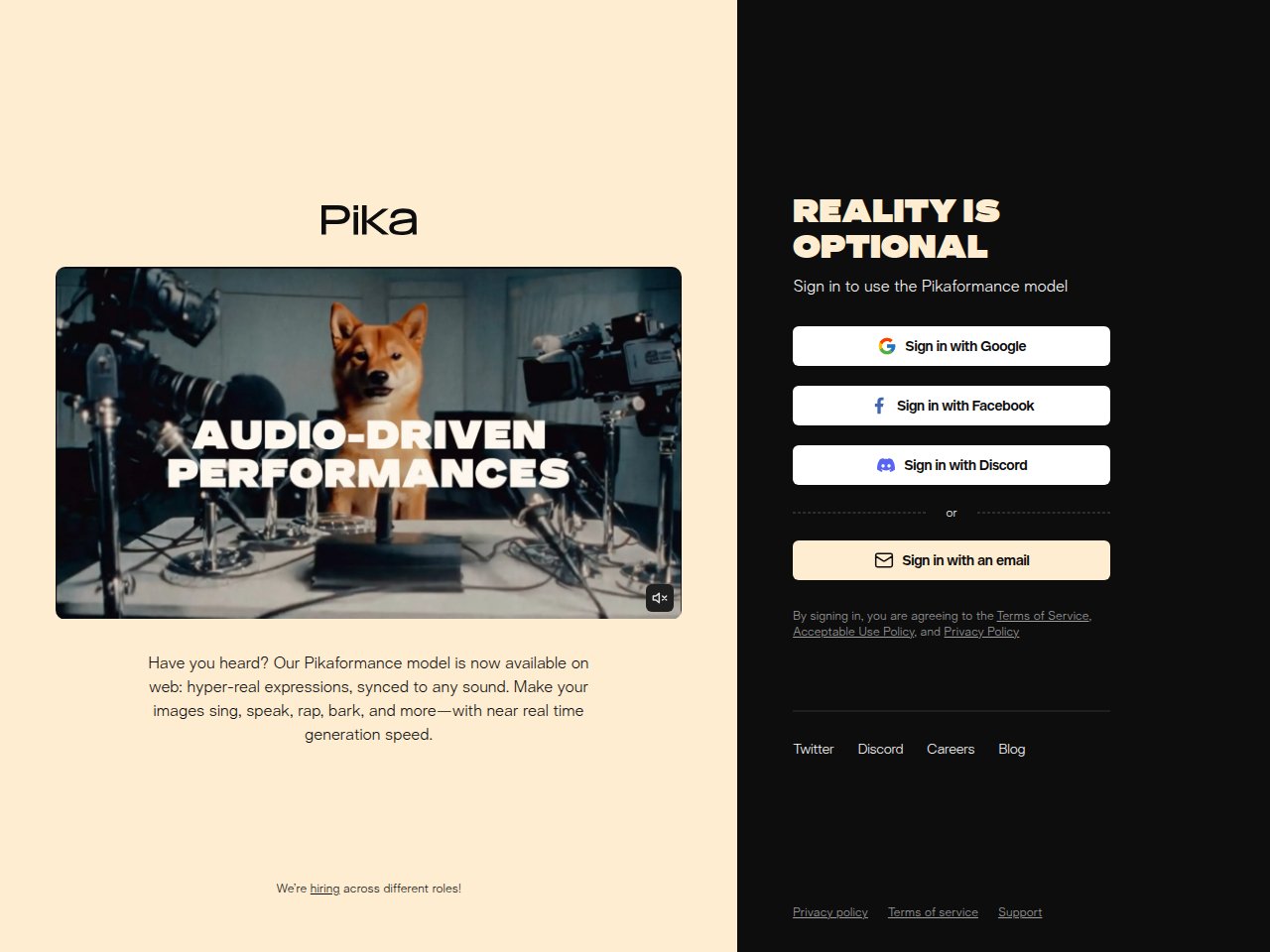
Pika occupies a weird and wonderful niche in the AI video landscape. It’s not trying to be the most realistic or the most professional — it’s trying to be the most fun and creative. And honestly? It succeeds.
Pika 2.5’s standout features are the “Pikaswaps” (swap any object or person in a video with something else), “Pikatwists” (transform scenes with wild style changes), and “Pikascenes” (generate immersive 3D scenes from a single image). These features have spawned countless viral TikTok and Instagram videos. If you’ve seen those “selfie with your younger self” videos circulating — that’s Pika.
I spent a week just messing around with Pikaswaps, turning everyday objects into absurd things. Coffee cup becomes a tiny octopus. My cat becomes a dragon. Pure creative chaos, and I loved every second of it.
What blew me away:
- Pikaswaps — seamlessly swap anything in a video. The tracking is surprisingly accurate.
- Viral potential — more of my Pika creations got engagement on social media than any other tool
- iPhone app — create and edit right from your phone. Great for spontaneous creativity.
- Low credit cost for basic videos — 5 credits for a simple text-to-video with Turbo model
Pricing:
- Free: 80 credits (roughly 16 basic videos)
- Standard: $10/mo — 700 credits
- Pro: $35/mo — 2,300 credits
- Fancy: $95/mo — 6,000 credits, fastest speed
What actually annoyed me:
The credit system is a nightmare to predict. A basic text-to-video costs 5 credits, but a Pikatwist with the Pro model costs 80 credits, and a 10-second Pikascene at 1080p costs 100 credits. So your 700 Standard credits might give you 140 basic videos or 7 high-quality Pikascenes. That’s a massive range, and Pika doesn’t make it clear upfront. Also, while the creative effects are incredible, the base video generation quality lags behind Runway and Sora for realistic content. Pika’s strength is creative and stylized — if you need photorealistic video, look elsewhere.
Frankie’s Verdict: Pika is a creative playground, not a production tool. If you’re a social media creator who lives on TikTok/Instagram and wants viral-ready effects, Pika is your jam. For serious video production, pair it with Runway for the best of both worlds.
7. InVideo AI — The “I Don’t Want to Edit” Solution
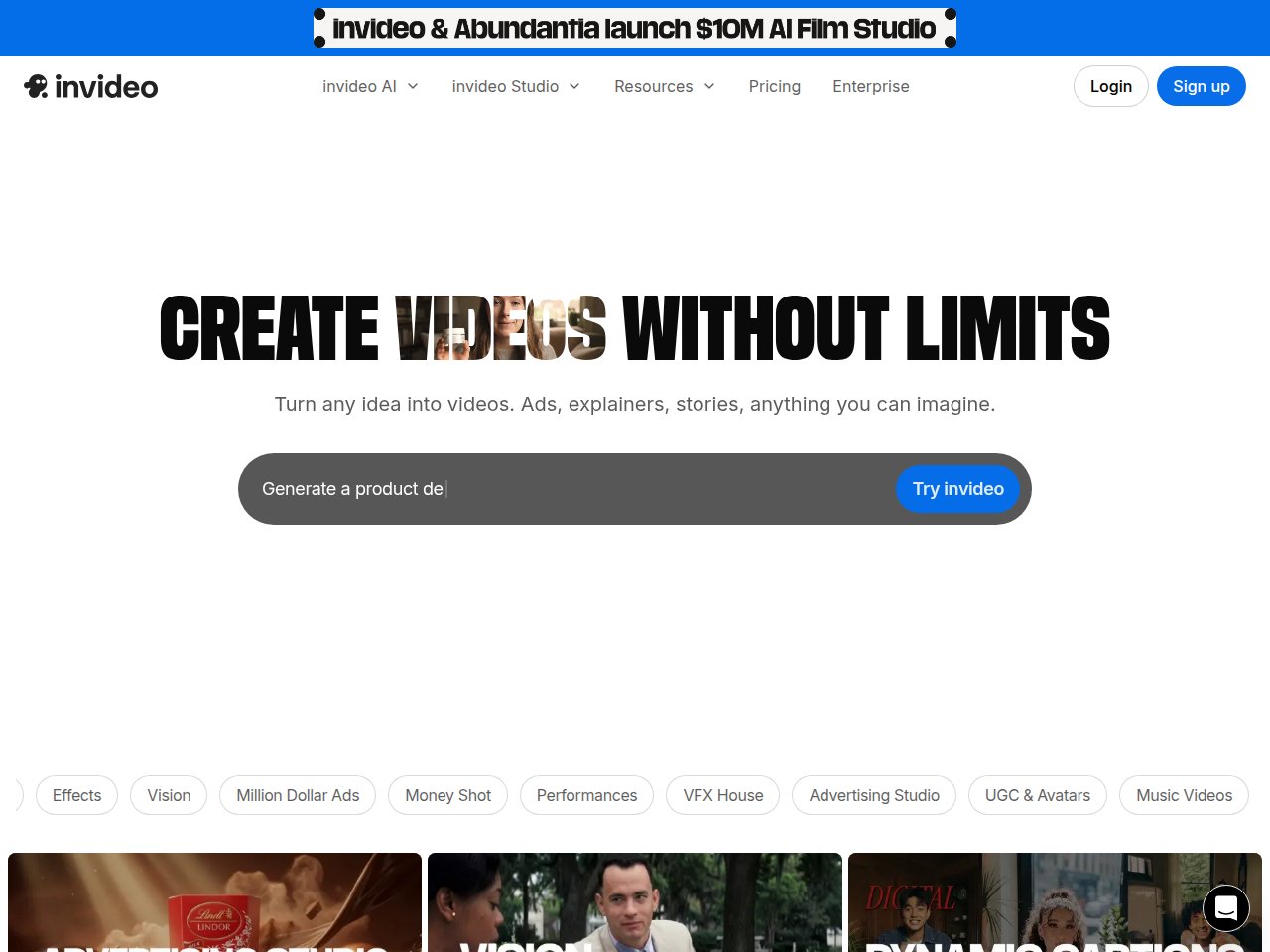
InVideo AI is fundamentally different from every other tool on this list. While the others generate raw video clips, InVideo generates complete, edited videos — with scripts, stock footage, voiceovers, transitions, subtitles, and background music. Type “make a 5-minute YouTube video about the history of coffee” and you get a fully assembled video ready to upload.
The magic move? In October 2025, InVideo became OpenAI’s first official partner for Sora 2 integration AND secured trusted partner status with Google for VEO 3.1 access. So you’re getting top-tier AI generation engines at a fraction of the standalone cost.
I tested it by generating 20 different YouTube-style explainer videos. About 60% were usable with minor edits, 25% needed significant rework, and 15% were basically unusable. Those are honestly decent numbers for a fully automated pipeline.
What blew me away:
- Full video production in one prompt — script, footage, voiceover, music, subtitles. All automated.
- Sora 2 + VEO 3.1 integration — access to premium AI video models starting at $28/mo (78-84% cheaper than standalone)
- 16 million+ stock assets — photos, videos, and music tracks included
- AI dubbing in 50+ languages
Pricing:
- Free: 10 min/week AI generation, 4 exports/week (with watermark)
- Plus: $28/mo — more generation time, no watermark, Sora 2 access
- Max: $48/mo — higher quality, priority rendering
- Enterprise: custom pricing
What actually annoyed me:
The “fully automated” workflow sounds magical until you realize the AI makes creative decisions you might hate. It picks stock footage that’s sometimes hilariously wrong — I asked for a video about cryptocurrency and got B-roll of someone counting physical coins. The voiceover quality is decent but obviously AI-generated, which might be fine for faceless YouTube channels but won’t fool anyone who cares about production quality. And while having Sora 2 + VEO 3.1 access is cool, the integration is still rough — you can’t freely mix and match AI-generated clips with stock footage in the way you’d want.
Frankie’s Verdict: InVideo AI is the best option for people who want complete videos without learning video editing. It’s perfect for faceless YouTube channels, social media marketing agencies pumping out volume, and anyone who values speed over creative control. Just don’t expect cinema-quality output — it’s efficient, not artistic.
Head-to-Head Comparison: All 7 AI Video Generators
| Feature | Runway | Sora 2 | HeyGen | Synthesia | Kling AI | Pika | InVideo AI |
|---|---|---|---|---|---|---|---|
| Best For | Creators | Visual quality | AI avatars | Enterprise | Budget/free | Creative FX | Full auto-edit |
| Max Resolution | 4K | 1080p | 1080p | 1080p | 1080p | 1080p | 1080p |
| Max Duration | ~16 sec | 25 sec | 60 min | Unlimited | 3 min | ~10 sec | Unlimited |
| Free Tier | 125 credits (once) | Via Plus ($20) | 3 videos/mo | 3 min/mo | 66 credits/day | 80 credits | 10 min/wk |
| Starting Price | $12/mo | $20/mo | $29/mo | $18/mo | $10/mo | $10/mo | $28/mo |
| Text-to-Video | Yes | Yes | No (avatar only) | No (avatar only) | Yes | Yes | Yes |
| Image-to-Video | Yes | Limited | No | No | Yes | Yes | No |
| Audio Generation | No | Yes | Yes (TTS) | Yes (TTS) | Yes | No | Yes (TTS) |
| Multilingual | No | No | 40+ languages | 140 languages | No | No | 50+ languages |
| Frankie’s Rating | 4.6/5 | 4.3/5 | 4.5/5 | 4.1/5 | 4.4/5 | 4.0/5 | 3.8/5 |
What Type of AI Video Do You Actually Need?
Before you throw money at any of these tools, ask yourself one question: what kind of video am I making? Because these tools are NOT interchangeable.
Creative / cinematic video from text or images
Go with Runway (best overall) or Sora (best quality, if you can afford Pro). Kling AI is the budget alternative that punches way above its weight.
AI avatar / talking head videos
HeyGen for small-to-mid teams, Synthesia for enterprise. Both do avatars well, but they serve different audiences.
Full automated video production
InVideo AI is the only real option here. It’s the only tool that generates complete, edited videos from a text prompt. Pair it with Sora 2 access for better visuals.
Viral social media content
Pika for creative effects and swaps, Kling AI for longer clips with audio, or Runway for polished short-form content.
How I Tested These AI Video Generators
I believe in testing methodology, not vibes. Here’s exactly what I did:
- 100+ videos per platform — generated at least 100 videos on each paid plan over 8 weeks
- Standardized prompts — used the same 25 text prompts across all text-to-video tools (covering landscapes, people, animals, abstract, product shots)
- Quality scoring — rated each output on visual fidelity (1-10), motion naturalness (1-10), and prompt adherence (1-10)
- Speed testing — measured generation time for comparable outputs
- Cost analysis — calculated actual per-video cost at each tier, accounting for failed generations
- Real-world usage — used each tool for actual projects (YouTube thumbnails come to life, social media posts, client demos)
I also tested the avatar-specific tools (HeyGen and Synthesia) with a separate battery of 50 scripts in 5 languages to evaluate lip sync accuracy and avatar naturalness.
The Dirty Truth About AI Video Pricing
Let me save you some frustration. Every AI video tool uses a credit system, and every credit system is designed to be confusing. Here’s what your monthly spend actually looks like if you’re generating 20 decent-quality videos per month:
| Tool | Plan Needed | Monthly Cost | Cost per Video |
|---|---|---|---|
| Runway | Pro ($28) | $28 | ~$1.40 |
| Sora 2 | Pro ($200) | $200 | ~$10.00 |
| HeyGen | Creator ($29) | $29 | ~$1.45 |
| Synthesia | Creator ($64) | $64 | ~$3.20 |
| Kling AI | Free (!) | $0 | $0 |
| Pika | Pro ($35) | $35 | ~$1.75 |
| InVideo AI | Plus ($28) | $28 | ~$1.40 |
Yeah. Sora at $10 per video versus Kling at literally free. That’s the reality of the market right now.
What’s Coming Next in AI Video (2026 Predictions)
Having tested all these tools obsessively, here’s where I think things are heading for the rest of 2026:
- 5-minute continuous generation — Kling is already at 3 minutes, and I expect others to catch up. By end of 2026, generating a full 5-minute clip in one shot should be standard.
- Real-time generation — we’re already seeing sub-30-second render times. Real-time AI video generation for live streaming and gaming is coming fast.
- Audio-visual co-generation becomes standard — Sora and Kling already do it. By mid-2026, every tool will generate video with synchronized sound.
- Price collapse — competition from Kling and Chinese tools will force Western tools to drop prices. I expect Runway’s starting price to hit $8-10/mo by year-end.
- Enterprise adoption acceleration — Synthesia and HeyGen are just the beginning. Expect every Fortune 500 company to have an AI video tool in their stack by end of 2026.
The Bottom Line
AI video generation in 2026 is like AI image generation was in 2024 — it just crossed the “actually useful” threshold, and things are moving fast. The tools are good enough for real production work now, but each one excels in a different niche.
My honest recommendation for most people: start with Kling AI’s free tier to experiment, then move to Runway Pro ($28/mo) when you’re ready to get serious. Add HeyGen if you need avatar videos, and Pika if you want creative social media content.
And stop paying $200/mo for Sora Pro unless you genuinely need that specific level of visual quality. For 95% of use cases, Runway + Kling gives you everything you need at a tenth of the cost.
See you in 3 months when all of this is probably outdated. Such is life in AI.
— Frankie
🔔 Stay ahead of the AI curve
Frankie drops honest AI tool reviews every week. No spam, no sponsored garbage — just tools that actually work.
FAQ
What is the best free AI video generator in 2026?
Kling AI offers the best free tier with 66 daily credits, enough for about one quality video per day. Pika also offers 80 free credits (one-time), and InVideo AI gives you 10 minutes of generation per week for free. For the most generous ongoing free access, Kling is the clear winner.
Is Sora worth the $200/month price?
For most people, no. The ChatGPT Pro plan at $200/month is only worth it if you use ChatGPT heavily for other tasks AND need the highest possible AI video quality. For video generation alone, Runway Pro at $28/month delivers 90% of the quality at 14% of the price. Sora’s Plus tier ($20/mo) is too limited to be useful — 5-second watermarked 720p clips aren’t production-ready.
Can AI video generators replace human videographers?
Not yet, but they’re getting close for specific use cases. AI avatar tools like HeyGen and Synthesia have already replaced human presenters for training and marketing videos at many companies. For creative filmmaking and advertising, AI video is currently best as a supplement — generating B-roll, concept videos, and storyboard animations — rather than a full replacement.
Which AI video tool is best for YouTube content?
It depends on your channel type. For faceless YouTube channels (listicles, explainers, compilations), InVideo AI automates the entire production pipeline. For channels where quality matters, Runway produces the best creative footage. For talking-head channels, HeyGen can generate your AI avatar delivering any script without you being on camera.
How long can AI-generated videos be?
Kling AI currently leads with 3-minute continuous generation — the longest in the market. Sora maxes out at 25 seconds on Pro. Runway generates clips up to about 16 seconds. For longer videos, avatar tools like HeyGen (up to 60 min) and Synthesia (unlimited) have no real duration limits since they’re compositing rather than generating frame-by-frame.
Are AI-generated videos copyrightable?
This is still a legal gray area in 2026. In the US, the Copyright Office has indicated that purely AI-generated content may not be copyrightable, but content with “sufficient human authorship” (like directing, editing, and prompting) likely is. Most AI video tools grant you commercial usage rights on paid plans, but that covers the license to use the tool’s output — not necessarily copyright ownership. Consult a lawyer for commercial projects.
What hardware do I need to use AI video generators?
Good news: all seven tools on this list are cloud-based, so you don’t need a powerful GPU. A basic laptop with a decent internet connection is enough. The AI processing happens on the company’s servers. The only hardware consideration is storage — AI-generated videos can be large files (1080p at 30fps adds up fast), so make sure you have enough disk space or cloud storage.
Can I use AI-generated videos for commercial purposes?
Yes, all paid plans on these tools include commercial usage rights. Free tiers typically restrict commercial use or add watermarks. Runway, HeyGen, Synthesia, and Kling AI all explicitly grant commercial rights on their paid plans. Always check the specific terms of service, as restrictions may apply to certain content types (like deepfakes of real people).