Best AI Voice & Phone Agents 2026: Bland AI vs Air AI vs Retell AI (I Called Them All)
Last updated: March 2026 — March 2026: Initial publication with hands-on testing of 7 voice agent platforms including Retell AI, Vapi, and Bland AI. | By Frankie
Short answer: Retell AI is the best overall AI voice agent platform for most teams in 2026. It has the lowest barrier to entry ($0.07/min, no platform fee), sub-600ms latency, a drag-and-drop builder, and it doesn’t require you to mortgage your house to get started. For developer-heavy teams that want maximum control, Vapi is the move. For enterprises with six-figure budgets and phone-heavy operations, PolyAI delivers the most human-sounding calls I’ve ever heard from a bot.
Now let me tell you how I arrived at that conclusion — by spending three weeks making hundreds of AI phone calls, annoying my coworkers, and racking up a truly embarrassing Twilio bill.
Here’s the thing about AI voice agents in 2026: the market has absolutely exploded. Two years ago, you had maybe three serious options. Now there are dozens of platforms all claiming their bot “sounds just like a human.” Spoiler alert: most of them don’t. Some sound like a caffeinated robot reading a script through a tin can. Others are genuinely uncanny. I tested seven of the biggest names to figure out which ones actually deliver.
📑 Table of Contents
Quick Verdict: Best AI Voice Agent by Use Case (2026)
| Use Case | Best Pick | Why |
|---|---|---|
| Best overall (value + quality) | Retell AI | $0.07/min base, drag-and-drop builder, SOC 2 + HIPAA ready |
| Best for developers | Vapi | Deepest API control, 1M+ concurrent calls, BYO everything |
| Best for enterprise call centers | PolyAI | 87% containment rate, warmest voice, handles interruptions flawlessly |
| Best for no-code teams | Synthflow | Visual builder, 30+ languages, sub-500ms latency, starts at $29/mo |
| Best for high-volume outbound | Bland AI | Built for scale outbound calling, API-first, from $0.09/min |
| Best voice quality (TTS) | PlayHT | 800+ voices, 140+ languages, best-in-class voice cloning |
| Most overhyped (skip it) | Air AI | $25K-$100K upfront fee, reliability issues, better alternatives exist |
📖 Related reviews: Best AI Chatbots 2026 · Best AI Customer Service Tools 2026
🔔 Stay ahead of the AI curve
Frankie drops honest AI tool reviews every week. No spam, no sponsored garbage — just tools that actually work.
How I Tested These AI Voice Agents
I didn’t just read the marketing pages and call it a day. Here’s my actual testing methodology:
- 50+ test calls per platform — inbound and outbound, using standardized scripts for appointment booking, FAQ handling, lead qualification, and complaint resolution
- Latency measurements — I timed response delays with a stopwatch (yes, literally) across 10 calls per platform during peak hours
- Interruption handling — I deliberately interrupted the AI mid-sentence to see how it recovered. This is the real test — bad bots just keep talking over you
- Edge case torture — background noise, heavy accents, rapid topic switching, mumbling, and asking questions the bot wasn’t trained for
- Integration testing — connected each platform to a test CRM (HubSpot) and calendar (Google Calendar) to see if the “seamless integrations” were actually seamless
- Pricing math — calculated the real cost per call at 1,000 and 10,000 minutes/month, including all the hidden fees they don’t put on the pricing page
Let’s get into it.
The 7 Best AI Voice & Phone Agent Platforms: Full Reviews
1. Retell AI — Best Overall Value
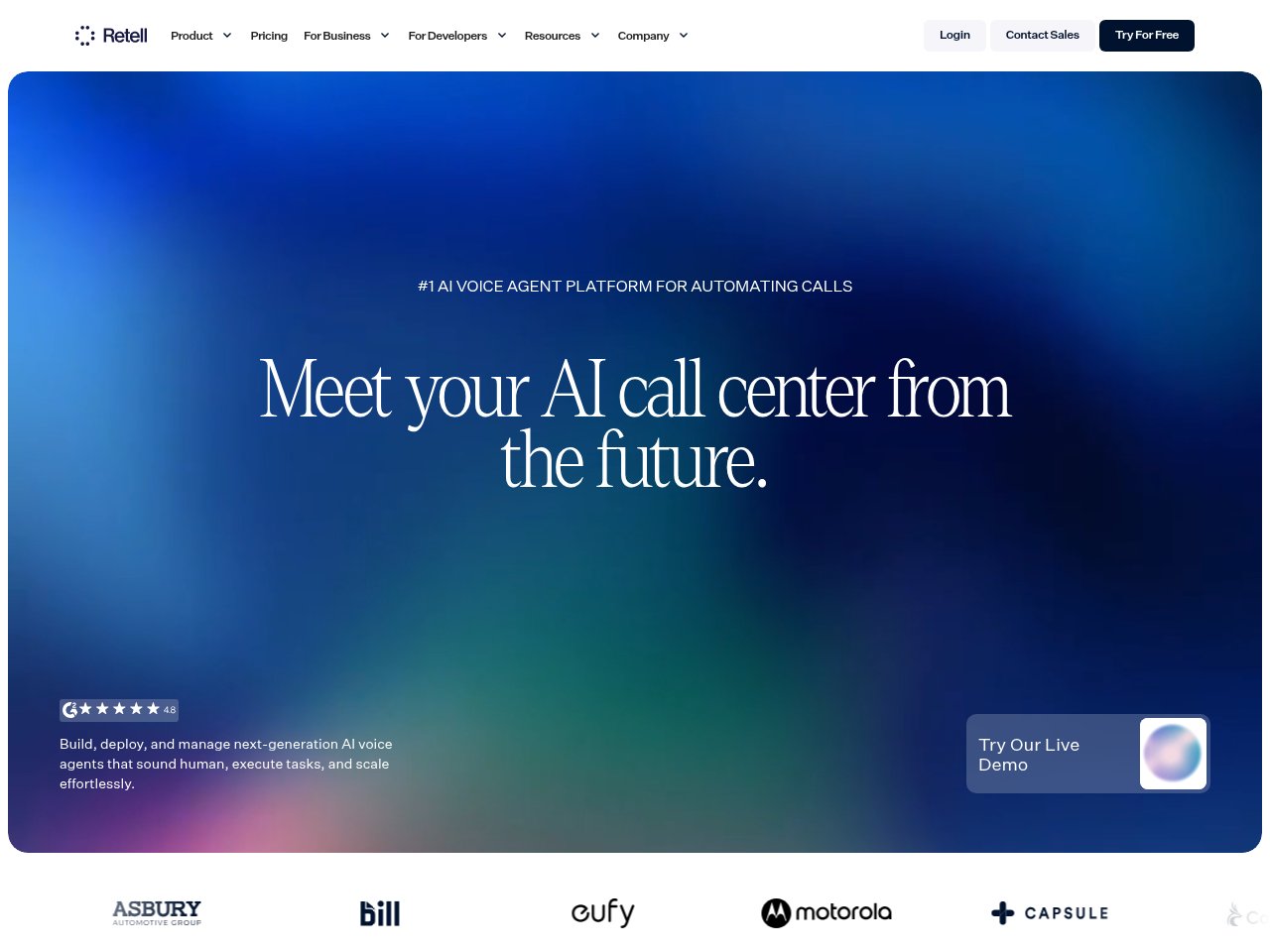
One-line verdict: The best balance of price, features, and ease of use. If I had to pick one platform for a new project tomorrow, this is it.
Retell AI has quietly become the platform that everyone in the AI voice space benchmarks against. And for good reason — they’ve managed to nail the trifecta that most competitors get wrong: affordable pricing, low latency, and a builder that doesn’t require a computer science degree.
My testing setup: I built a dental office appointment scheduler on Retell. Patients call in, the AI asks about their issue, checks availability against a Google Calendar, and books the slot. The whole thing took me about 45 minutes to set up using their drag-and-drop flow builder. No code. I’m not a developer, and I got it working on my first try. That’s not something I can say about most platforms on this list.
What blew me away:
- Sub-600ms response latency — conversations feel genuinely natural. The gap between “I asked a question” and “the AI started responding” was barely noticeable
- Interruption handling is excellent — I cut the AI off mid-sentence 20+ times and it recovered gracefully every single time. No awkward loops or repeated phrases
- 31+ languages with native-quality speech — I tested Spanish and Mandarin and both sounded natural, not like Google Translate doing karaoke
- SOC 2 certified, HIPAA-ready — this matters hugely for healthcare and finance. Most competitors are still “working on it”
- Built-in A/B testing — you can test different call flows and voice configurations against each other. Seriously useful for optimization
- Pass-through LLM pricing — you pick your own model (GPT, Claude, etc.) and pay the actual API cost. No markup
Pricing breakdown:
- Base rate: $0.07/min (no platform fee, no monthly minimum)
- Free tier: $10 in credits to test
- 20 concurrent calls included free (additional: $8/call/month)
- Phone numbers: $2/month each
- Real-world cost at 1,000 min/month: ~$130-$200 depending on LLM and voice choices
What actually annoyed me:
The pricing looks clean until you start adding things. That $0.07/min base quickly becomes $0.13-0.20+ when you add a decent LLM ($0.02-0.08/min), quality ElevenLabs voices ($0.04/min vs $0.015 for standard), telephony costs, and knowledge base features. It’s still cheaper than most competitors, but I wish they’d just show a “typical real-world cost” on their pricing page instead of leading with the bare minimum. Also, the documentation could use a serious refresh — some sections still reference deprecated API endpoints.
Frankie’s Verdict: Retell is my top pick for 2026. The pay-as-you-go model means you’re not committing $25K before you’ve proven anything works. The builder is intuitive, the call quality is excellent, and the compliance certifications mean you can actually use this in regulated industries. Start here.
2. Vapi — Best for Developers
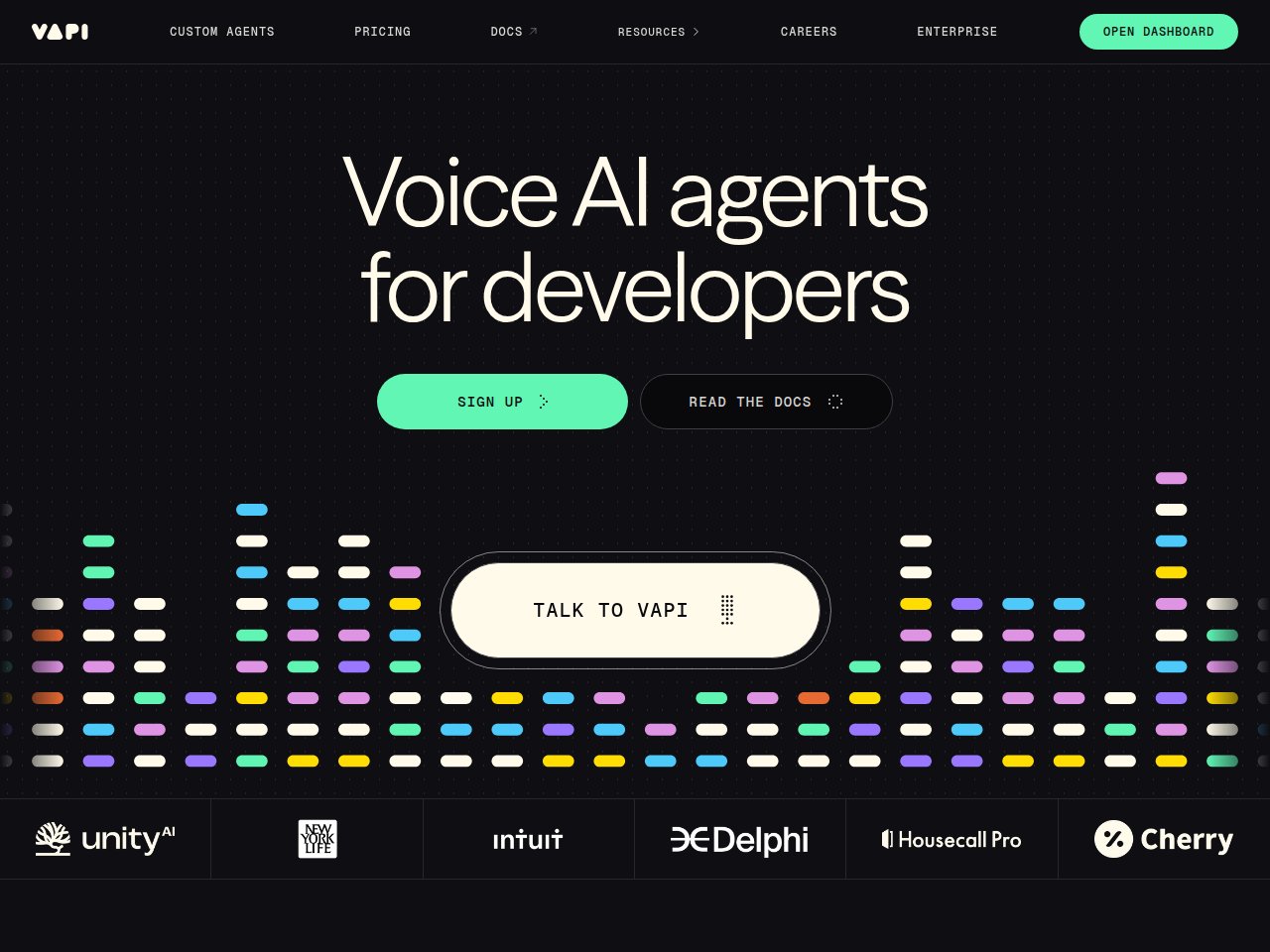
One-line verdict: If you have developers on your team and want maximum control over every aspect of your voice agent, Vapi is the most powerful toolkit available.
Vapi is the platform I keep recommending to engineering teams, and the one I keep warning non-technical founders away from. It’s incredibly powerful, but it’s also the kind of tool where you’ll spend your first day reading API docs instead of making calls.
Think of Vapi as the middleware layer between your phone system and your AI stack. You plug in your own speech-to-text provider, your own LLM, your own text-to-speech engine, and Vapi orchestrates the whole conversation. This means you have total control — and total responsibility for making it all work together.
What blew me away:
- Handles 1M+ concurrent calls — if you’re building at serious scale, Vapi can handle it. Period
- Lowest latency I measured — because you can optimize every component in the stack, Vapi agents can be snappier than anything else on the market
- Squads feature — chain multiple specialized agents together. One agent qualifies the lead, hands off to a booking agent, then transfers to a specialist. Smooth as hell
- Function calling mid-conversation — the agent can trigger external APIs in real-time during a call. Check inventory, pull up a customer record, process a payment — all while chatting
- Knowledge Base (RAG) support — upload PDFs and docs, and the agent answers questions using your actual content
Pricing breakdown:
- Platform fee: $0.05/min
- But wait — you also pay separately for STT, LLM, TTS, and telephony
- Real-world cost: $0.30-0.33/min for a production-quality setup
- Typical enterprise deployment: $3,000-6,000/month for moderate usage
- Free tier: $10 credit to start
What actually annoyed me:
The advertised “$0.05/min” is borderline misleading. Yes, that’s Vapi’s platform fee. But you can’t make a single call for $0.05/min. You need STT ($0.01-0.04/min), an LLM ($0.02-0.08/min), TTS ($0.02-0.04/min), and telephony ($0.02-0.04/min). By the time you’ve assembled a production stack, you’re at $0.30+/min. That’s 6x the advertised price. Also, managing contracts with 4-6 different providers is a headache. Your billing dashboard looks like a crime scene. And if you’re not technical, the setup process will make you question your career choices.
Frankie’s Verdict: Vapi is the Ferrari of voice AI platforms — incredible performance, total control, and a maintenance schedule that’ll keep your engineering team busy. If you have the technical chops, there’s nothing more powerful. If you don’t, you’ll be miserable. Know yourself before you commit.
3. Bland AI — Best for High-Volume Outbound
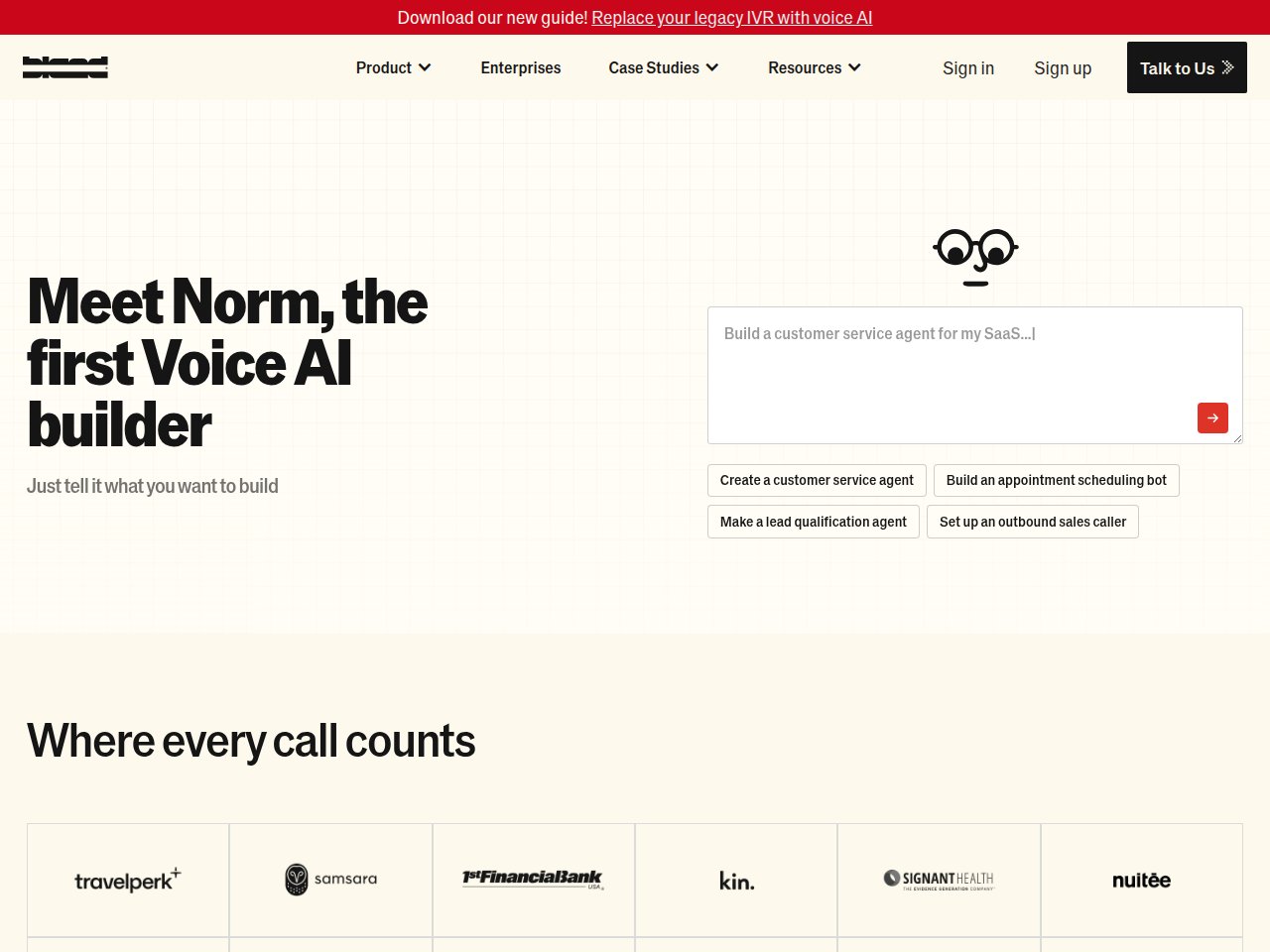
One-line verdict: Built from the ground up for outbound calling at scale. If you’re making 10,000+ calls a month, Bland is purpose-built for you.
Bland AI is the platform that unapologetically focuses on one thing: outbound calling at scale. While competitors try to be everything to everyone, Bland doubles down on automated outreach, follow-ups, and appointment setting. And honestly? That focus pays off.
I set up a lead qualification campaign on Bland — the AI calls a list of leads, asks three qualifying questions, and books meetings for the ones that pass. The workflow took about two hours to configure via their API (it’s developer-oriented, no drag-and-drop builder here). Once running, it handled 200 calls in a single afternoon without breaking a sweat.
What blew me away:
- Outbound calling is razor-sharp — the call quality and pacing for scripted outbound campaigns is the best I tested
- Webhook integrations — every call event triggers a webhook, so your CRM stays updated in real-time
- Multilingual support — handles language switching mid-call, which is surprisingly useful for diverse markets
- Live call transfers — when the AI qualifies a hot lead, it can warm-transfer to a human rep immediately
- SMS follow-up — automatically sends a text after the call with confirmation details or next steps
Pricing breakdown:
- Build plan: $299/month (entry level)
- Scale plan: $499/month (lower per-minute rates)
- Per-minute rate: $0.09/min for connected calls
- Add-ons billed separately: SMS, TTS, call transfers, advanced integrations
- Enterprise: custom pricing with dedicated infrastructure
What actually annoyed me:
Bland is outbound-only in any meaningful sense. If you need a platform that also handles inbound customer support calls, you’ll need a second tool. The $299/month minimum is also a real barrier for small teams just testing the waters — you’re committed before you know if it works for your use case. The API-first approach means no visual builder, which is fine for developers but leaves non-technical teams completely stranded. And their documentation, while functional, assumes you already know what you’re doing. The onboarding experience is basically “here’s the API docs, good luck.”
Frankie’s Verdict: If you’re running a sales team that makes thousands of outbound calls and you have a developer to set it up, Bland delivers. It’s not trying to be everything — it’s trying to be the best outbound calling machine, and it largely succeeds. Just don’t expect it to answer your support line too.
4. Synthflow — Best for No-Code Teams
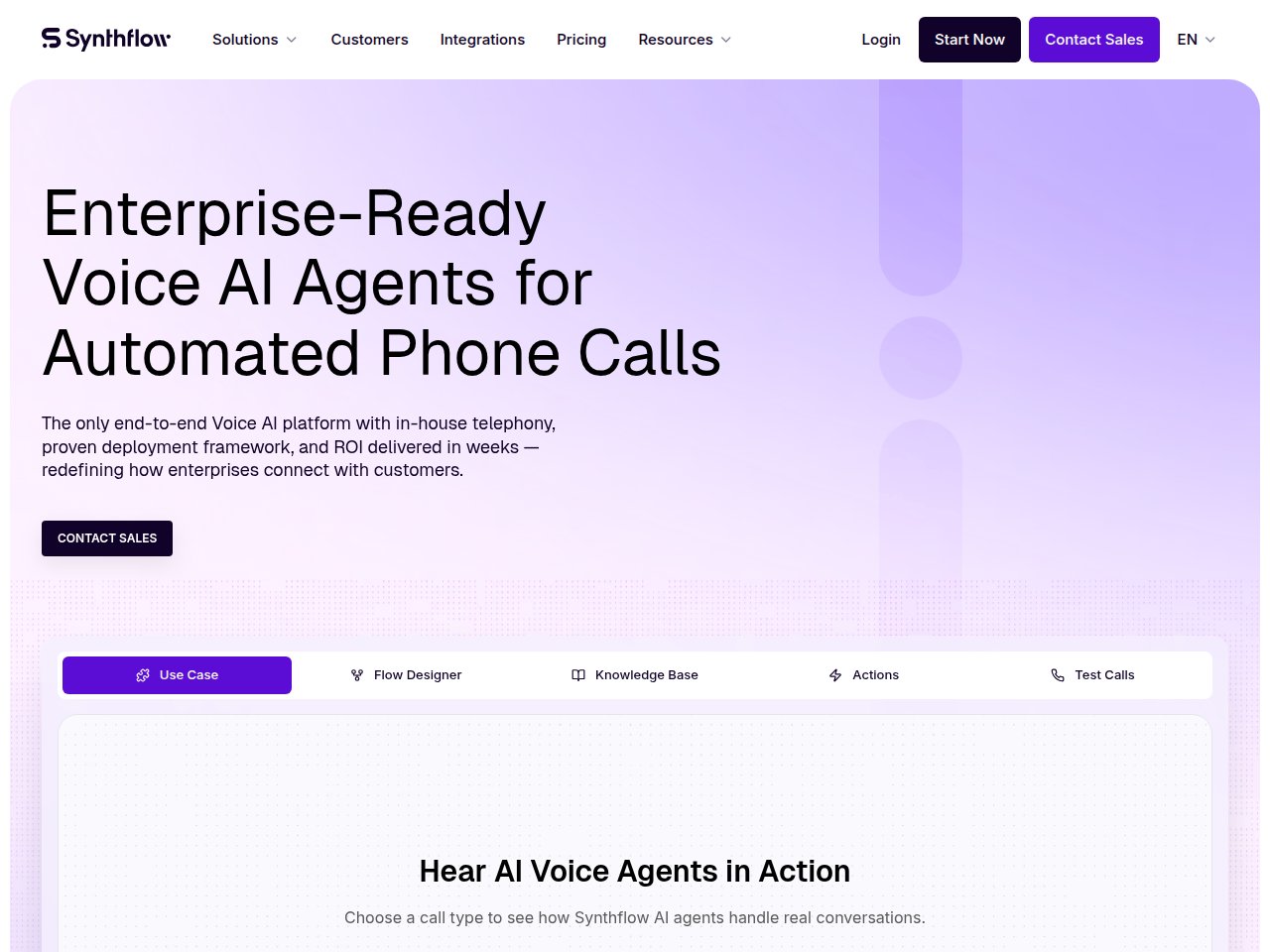
One-line verdict: The easiest AI voice agent platform to set up. If you can use Canva, you can build a Synthflow voice agent.
Synthflow is what happens when someone looks at Vapi and says “cool, but what about the 95% of businesses that don’t have developers?” The entire platform is built around a visual drag-and-drop interface that makes building voice agents feel like assembling a flowchart in Google Slides.
I built an inbound customer support agent for a fictional e-commerce store on Synthflow. From sign-up to having a working phone number that answers calls and looks up order status: 22 minutes. That’s not a typo. Twenty-two minutes. On Vapi, the same setup took me the better part of a day (and I had to write actual code).
What blew me away:
- No-code visual builder — genuinely intuitive. Drag conversation nodes, connect them, set conditions. Done
- Sub-500ms latency — despite the abstraction layer, call quality is competitive with developer-first platforms
- 30+ languages — with natural-sounding output in most of them
- SOC 2, HIPAA, GDPR compliant — they take compliance seriously
- Powered by GPT-4o under the hood — you get a strong LLM without having to configure anything
- Quick integrations — HubSpot, Salesforce, Google Calendar, Zapier — all pre-built and working out of the box
Pricing breakdown:
- Starter: $29/month (50 minutes)
- Pro: $99/month (200 minutes)
- Growth: $449/month (1,000 minutes)
- Agency: $899/month (2,000 minutes)
- Per-minute overage: ~$0.08/min
- Real-world cost at 1,000 min/month: $449 (vs ~$150 on Retell)
What actually annoyed me:
The price-per-minute math doesn’t work in your favor at scale. At 1,000 minutes/month, you’re paying $0.45/min on the Growth plan. Retell charges $0.13-0.20/min for the same volume. That’s 2-3x more expensive for essentially the same output. You’re paying a premium for the no-code convenience, which is fair — but it adds up fast. The bigger issue: when you outgrow the visual builder and need custom logic, you hit a wall. There’s limited access to buildable tools and the customization ceiling is real. Several users on G2 mentioned switching to Retell or Vapi once their needs got more complex. Tech support also got mixed reviews.
Frankie’s Verdict: Synthflow is the best on-ramp into AI voice agents. Period. If you’re a small business owner, a marketer, or anyone who doesn’t code — start here. Just know that you might outgrow it, and the per-minute cost is the highest on this list. Think of it as the training wheels platform: excellent for getting started, but you may graduate to something more powerful.
5. PolyAI — Best for Enterprise Call Centers

One-line verdict: The most human-sounding AI voice agent I’ve ever heard. Also the most expensive. By a lot.
PolyAI is playing a completely different game from everyone else on this list. While Retell and Vapi are platforms where you build your own agents, PolyAI is a managed service. They build the agent for you, train it on your data, deploy it, and continuously optimize it. You’re hiring an AI team, not buying a tool.
I got a demo call from PolyAI’s showcase agent (a hotel concierge bot), and I’m not exaggerating when I say it took me about 15 seconds to realize I wasn’t talking to a human. The voice warmth, the natural pauses, the way it handled my interruption mid-sentence without any hiccup — it was genuinely unsettling in the best way possible.
What blew me away:
- Voice quality is in a league of its own — warm, natural, with intonation that actually matches the emotional context of the conversation
- 87% call containment rate — meaning only 13% of calls need a human. That’s industry-leading
- Handles authentication, transactions, and multi-turn flows — this isn’t just answering FAQs. It’s doing real work on the phone
- Native integrations with major CCaaS — Amazon Connect, Avaya, Cisco, Five9, Genesys. Drops right into your existing call center infrastructure
- Continuous optimization — PolyAI’s team actively monitors and improves your agent’s performance over time
Pricing breakdown:
- Starting at ~$150,000/year (custom quotes only)
- Usage-based on top of the contract
- Includes implementation, training, maintenance, and 24/7 support
- No self-serve option. You talk to sales. That’s it.
What actually annoyed me:
Look, I get it — enterprise software is expensive. But $150K/year as a starting point puts PolyAI completely out of reach for 99% of businesses. There’s no self-serve tier, no way to test it yourself, and the sales process is the classic enterprise dance of demos, proposals, and “let me check with my team.” The implementation timeline is also measured in weeks, not minutes. If you need a voice agent up and running this week, PolyAI literally cannot help you. Also, the lack of pricing transparency is frustrating — I had to dig through multiple third-party sources to even get a ballpark number. Just put a starting price on your website, PolyAI. We’re all adults here.
Frankie’s Verdict: If you’re a large enterprise running a call center with 100,000+ calls per month and you have the budget, PolyAI delivers the best voice quality and containment rates in the industry. Full stop. But for everyone else — which is most of you reading this — you’ll get 80% of the quality at 10% of the price from Retell or Vapi. The economics only work at massive scale.
6. PlayHT — Best Voice Quality for TTS
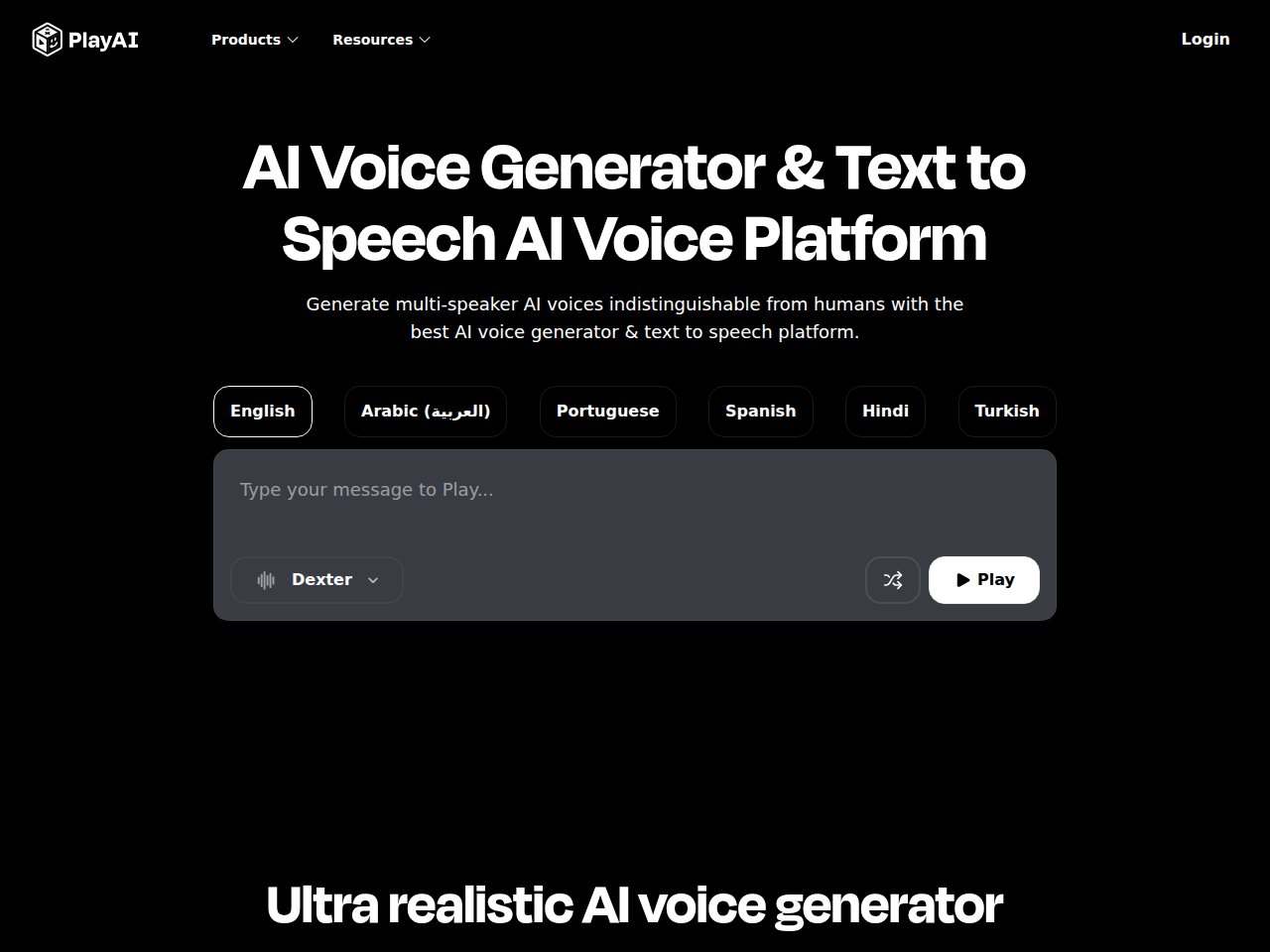
One-line verdict: The best text-to-speech engine you can plug into any voice agent stack. Not a full phone platform, but the voice quality is unmatched.
PlayHT is a bit of an outlier on this list because it’s not a full voice agent platform like Retell or Vapi. It’s a text-to-speech powerhouse that you can integrate into other systems. Think of it as the voice engine — the part that makes your AI actually sound good on the phone.
I used PlayHT’s API as the TTS provider for a Vapi agent, replacing the default voice. The difference was immediately noticeable. The PlayHT voice had more natural intonation, better emotional range, and none of that robotic “I’m clearly reading a script” quality that cheaper TTS engines have.
What blew me away:
- 800+ AI voices — the largest library I’ve found anywhere. Every accent, age, and style you can imagine
- 140+ languages and accents — with customizable pitch, speed, and tone
- Voice cloning — create a custom voice from a sample. The quality is scary good
- Conversational AI agents — they’ve added the ability to build interactive voice agents, not just one-way TTS
- API-first design — drops into any existing stack with minimal friction
Pricing breakdown:
- Free: 1 voice clone, 12,500 characters/month
- Creator: $31/month (billed annually, ~$49 monthly)
- Pro: $39/month
- Unlimited: custom pricing (unlimited characters, unlimited clones, commercial rights)
What actually annoyed me:
PlayHT is fantastic as a TTS engine, but their “conversational AI agent” feature feels bolted on. It’s nowhere near as capable as Retell or Vapi for building full phone workflows. If you’re looking for an all-in-one voice agent platform, PlayHT isn’t it. Use it as a component, not a complete solution. The pricing is also confusing — the “Creator” plan is listed at $49/month or $31/month billed annually, but the features page shows different numbers than the pricing page. Get your act together, PlayHT. And the free tier’s 12,500 character limit is barely enough to test anything meaningful.
Frankie’s Verdict: PlayHT is the best voice engine on this list, but it’s not the best voice agent platform. Use it to power the voice layer of your Vapi or Retell agent if you want premium voice quality. As a standalone phone solution, it’s still too immature. Think of PlayHT as the best ingredient, not the best meal.
7. Air AI — The One I Can’t Recommend
One-line verdict: Was the first big name in AI voice agents. Now it’s the cautionary tale.
I really wanted to like Air AI. They were pioneers in this space, and their early demos were genuinely impressive. But in 2026, with so many better and cheaper alternatives available, Air AI’s value proposition has completely collapsed.
Let me be blunt: Air AI charges a licensing fee of $25,000 to $100,000 upfront before you make a single call. Then it’s $0.11/min for outbound and $0.32/min for inbound on top of that. For that kind of money, you could run Retell AI for years and still have budget left over for a vacation.
What used to be impressive:
- “Infinite memory” — the AI recalls past conversations, which is legitimately useful for ongoing customer relationships
- Long conversation capability — can handle 10-40 minute calls, which is longer than most competitors
- Human-like voice quality — when it works, the voice is quite good. Natural intonation, appropriate pacing
Pricing breakdown:
- Upfront licensing fee: $25,000 – $100,000
- Outbound calls: $0.11/min
- Inbound/API calls: $0.32/min
- Plus telephony, integration, and setup costs
- Requires a dedicated dev team for implementation
What actually annoyed me (a lot):
Where do I even start? The $25K-$100K upfront fee is absolutely insane when Retell charges $0 upfront and $0.07/min. The inbound rate of $0.32/min is 4.5x what Retell charges. Multiple reviewers report reliability issues — dropped calls, unexpected behavior, and support responses that take days. The platform requires a dedicated development team for setup and ongoing maintenance, which adds even more cost. And here’s the kicker: the market has moved so far past Air AI’s 2024-era architecture that you’re essentially paying a premium for legacy technology with a famous name. The competitors didn’t just catch up — they lapped Air AI while charging a fraction of the price.
Frankie’s Verdict: I genuinely cannot recommend Air AI in 2026. Not when Retell does 90% of what Air AI does at less than 5% of the cost. Not when Vapi gives you more control and flexibility. Not when even Synthflow’s no-code builder outperforms Air AI’s setup experience. The only scenario where Air AI makes sense is if you’re already locked into a contract and the switching cost is too high. If you’re evaluating fresh, look literally anywhere else on this list.
AI Voice Agent Comparison Table (2026)
| Platform | Best For | Starting Price | Real Cost/Min | Latency | No-Code Builder | Languages | Compliance |
|---|---|---|---|---|---|---|---|
| Retell AI | Overall value | $0 (pay-as-you-go) | $0.13-0.20 | <600ms | Yes (drag-and-drop) | 31+ | SOC 2, HIPAA |
| Vapi | Developers | $0 ($10 credit) | $0.30-0.33 | <500ms | No | 30+ | SOC 2 |
| Bland AI | Outbound at scale | $299/month | $0.09+ | <700ms | No (API only) | 20+ | SOC 2 |
| Synthflow | No-code teams | $29/month | $0.45-0.58 | <500ms | Yes (visual builder) | 30+ | SOC 2, HIPAA, GDPR |
| PolyAI | Enterprise call centers | ~$150K/year | Custom | <400ms | No (managed service) | 20+ | Enterprise-grade |
| PlayHT | Voice quality (TTS) | Free (12.5K chars) | $0.02-0.04 | <500ms | Limited | 140+ | Standard |
| Air AI | Skip it | $25K-$100K upfront | $0.11-0.32 | <800ms | No | 15+ | Basic |
How to Choose the Right AI Voice Agent (Decision Framework)
After testing all seven platforms, here’s my honest decision tree:
Step 1: What’s your budget?
- Under $100/month: Synthflow Starter ($29/mo) or Retell free tier
- $100-500/month: Retell AI (pay-as-you-go) — best bang for buck
- $500-5,000/month: Retell or Vapi depending on technical capability
- $5,000+/month: Vapi (if you have devs) or PolyAI (if you want managed)
Step 2: Do you have developers?
- Yes: Vapi gives you maximum control. Bland AI if outbound-focused.
- No: Synthflow (easiest) or Retell (good builder + room to grow).
Step 3: Inbound, outbound, or both?
- Inbound only: Retell or PolyAI
- Outbound only: Bland AI or Retell
- Both: Retell or Vapi
What’s Actually Different About AI Voice Agents in 2026?
For anyone who looked at this space a year ago and thought “not ready yet” — things have changed dramatically:
- Latency dropped below 500ms — conversations now feel natural instead of like talking to someone on a bad satellite phone connection
- Interruption handling actually works — the AI can be cut off mid-sentence and recover gracefully. This was the #1 deal-breaker in 2024
- Pricing collapsed — what cost $0.50/min in 2024 now costs $0.07-0.15/min. The market is commoditizing fast
- Multi-language went from “demo” to “production” — voice agents can now handle 30+ languages with native-quality pronunciation
- Compliance certifications are real — SOC 2, HIPAA, GDPR — the platforms have matured enough for regulated industries
The bottom line: if you evaluated AI voice agents in 2024 and passed, it’s time to look again. The technology has genuinely crossed the “good enough” threshold for most business use cases.
FAQ: AI Voice & Phone Agents
What is an AI voice agent and how does it work?
An AI voice agent is software that handles phone conversations autonomously using speech-to-text (to understand what the caller says), a large language model (to decide how to respond), and text-to-speech (to speak the response aloud). The whole loop happens in under 600 milliseconds on modern platforms, making the conversation feel natural. Think of it as a chatbot that can talk on the phone instead of typing.
How much does an AI voice agent cost per minute in 2026?
Real-world costs in 2026 range from $0.07/min (Retell AI’s base rate) to $0.45+/min (Synthflow at lower volumes). The industry average for a production-quality setup is around $0.15-0.25/min when you include all components (platform fee + LLM + voice + telephony). Enterprise managed services like PolyAI operate on annual contracts starting around $150K/year. The price has dropped roughly 60-70% since 2024.
Can AI voice agents handle interruptions and natural conversation?
Yes — this was the biggest improvement in 2025-2026. Modern platforms like Retell AI and Vapi handle interruptions gracefully, allowing callers to cut in mid-sentence without the AI talking over them or losing context. PolyAI leads here with the most natural interruption handling I tested. Budget platforms and older systems (like Air AI) still struggle with this.
Which AI voice agent platform is best for small businesses?
Synthflow ($29/month, 50 minutes) or Retell AI ($0 upfront, pay-as-you-go at $0.07/min base). Synthflow wins on ease of setup — you can have a working voice agent in under 30 minutes with zero coding. Retell wins on long-term cost — it’s 2-3x cheaper per minute at scale. If you’re just testing the waters, start with Retell’s free $10 credit.
Is Bland AI or Retell AI better for outbound sales calls?
Bland AI is purpose-built for high-volume outbound and has slightly better call pacing and scripting tools for sales workflows. But it requires $299/month minimum and developer setup. Retell AI handles outbound well at a fraction of the cost with a visual builder. My recommendation: use Bland if you’re making 5,000+ outbound calls/month and have a developer. Use Retell for everything else.
Do AI voice agents support multiple languages?
Yes. Retell AI supports 31+ languages, Synthflow supports 30+, and PlayHT leads with 140+ languages and accents. The quality varies significantly by language — English, Spanish, and major European languages sound excellent on all platforms. Less common languages may still sound slightly robotic. I tested Spanish and Mandarin specifically and both sounded natural on Retell and Synthflow.
Are AI voice agents HIPAA compliant for healthcare use?
Retell AI and Synthflow are both SOC 2 certified and HIPAA-ready, making them suitable for healthcare applications. PolyAI offers enterprise-grade compliance. Vapi offers SOC 2 but check their current HIPAA status directly. Bland AI and PlayHT have more limited compliance certifications. Always verify current certifications directly with the vendor and get a signed BAA before processing any protected health information.
What’s the difference between Vapi and Retell AI?
Vapi is developer-first: you bring your own STT, LLM, and TTS providers and Vapi orchestrates the call. Maximum control, higher complexity, real cost ~$0.30/min. Retell AI is more turnkey: it includes everything in one platform with a visual builder, costs $0.13-0.20/min fully loaded, and is easier to set up. Choose Vapi if you have engineers and want granular control. Choose Retell if you want to get up and running quickly without managing multiple vendor contracts.
🔔 Stay ahead of the AI curve
Frankie drops honest AI tool reviews every week. No spam, no sponsored garbage — just tools that actually work.
Final Thoughts: Stop Overthinking It
I’ve spent three weeks making AI phone calls, and here’s what I keep coming back to: the gap between the best and second-best platform is much smaller than the gap between “using AI voice agents” and “not using them at all.”
If you’re a small-to-medium business, Retell AI is the answer 80% of the time. Low cost, no commitment, good enough quality for most use cases. Start there.
If you’re a developer building something custom, Vapi gives you the most power. Just budget more time and money than you think.
If you’re an enterprise with deep pockets and phone-heavy operations, PolyAI delivers the premium experience — but make sure the math works at your call volume.
And for the love of all that is holy, do not spend $25K+ on Air AI when better alternatives exist at a fraction of the cost.
The AI voice agent space is moving incredibly fast. What I’ve written here is accurate as of March 2026, but prices will keep dropping and capabilities will keep improving. The best time to start experimenting was six months ago. The second best time is today.
Now if you’ll excuse me, I need to go apologize to my phone for what I put it through this month.
— Frankie