For high-volume outbound calls with simple scripts, Bland AI edges ahead on pricing and ease of setup. But if you need custom voice agents with complex LLM-driven workflows, Vapi’s flexibility is unmatched. I tested both platforms with real cold-call scenarios, burned through about $47 in API credits, and nearly threw my laptop when Vapi’s webhook integration decided to ghost me for two hours. Here’s what I actually found.
Look, the AI voice agent space in 2026 is getting ridiculous. Everyone claims “human-like conversations” and “sub-second latency.” So I did what any reasonable person would do: I set up the exact same cold-calling script on both platforms and let them loose. The results were… not what the marketing pages promised.
Vapi vs Bland AI — Quick Comparison
| Feature | Vapi | Bland AI |
|---|---|---|
| Pricing Model | Platform fee + BYO provider costs | Subscription + per-minute |
| Base Cost/Min | $0.05 (real cost: $0.15–$0.33) | $0.11–$0.14 (all-inclusive) |
| Monthly Plans | Pay-as-you-go | Free / $299 / $499 / Enterprise |
| Latency | 550–800ms | ~800ms |
| Languages | 100+ | 20+ |
| Voice Cloning | Yes (via LMNT, ElevenLabs) | Yes (limited by plan tier) |
| No-Code Builder | Flow Studio (basic) | No |
| Best For | Developer teams, custom AI agents | Enterprise outbound, high volume |
| Compliance | Varies by provider stack | SOC II, GDPR, HIPAA |
What Is Vapi? (And Why Developers Love It)
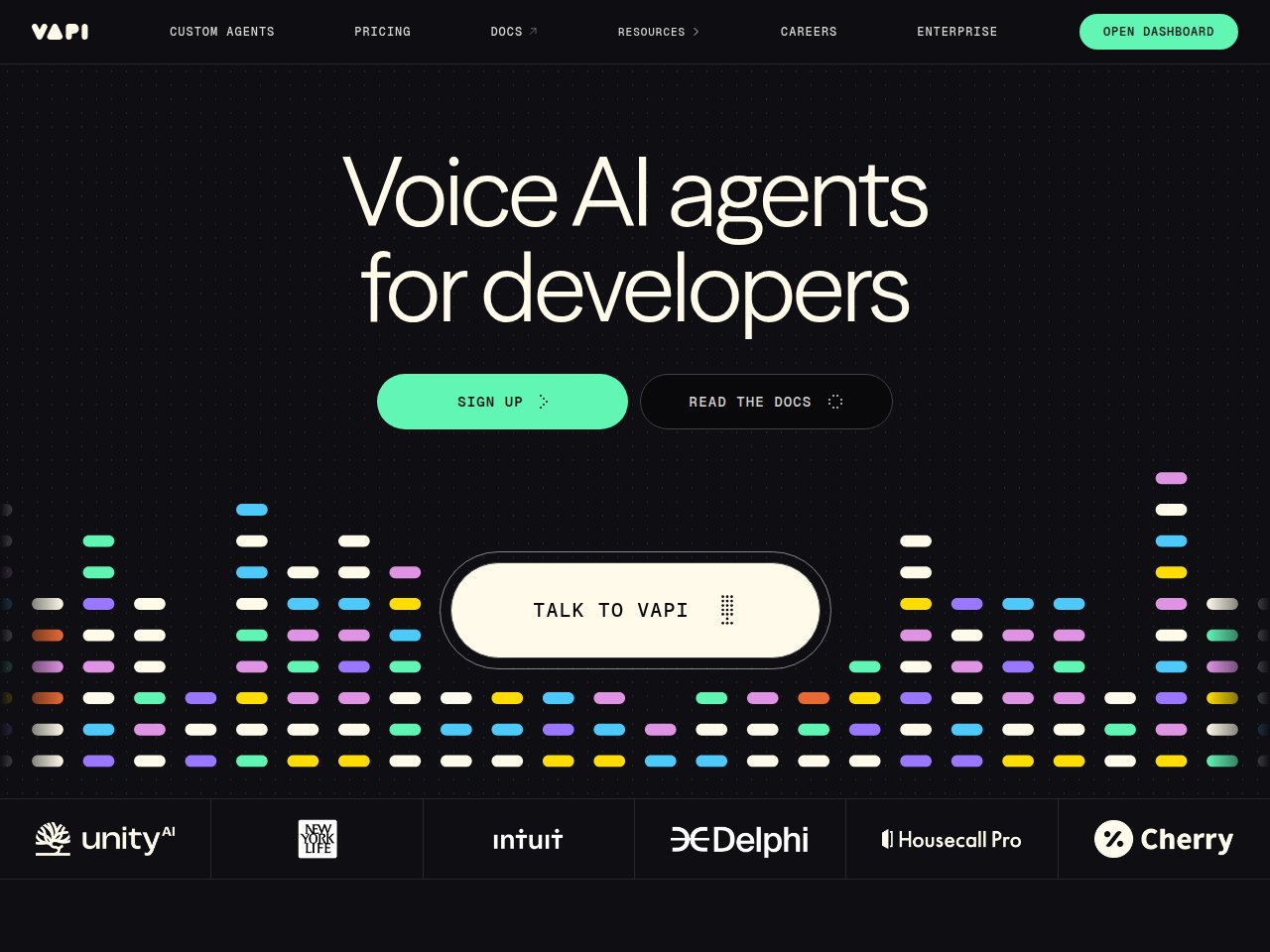

Vapi is the Swiss Army knife of AI voice agents. It’s a middleware platform that lets you build voice AI agents by plugging in your own stack — your choice of LLM (GPT-4o, Claude, Llama), your choice of text-to-speech (ElevenLabs, Azure Neural, Play.ht), your choice of speech-to-text (Deepgram, AssemblyAI), and your own telephony provider.
That “bring your own everything” approach is both Vapi’s superpower and its biggest headache.
My experience setting up Vapi
I spent 3 hours trying to set up Vapi’s webhook integration and almost rage-quit. The documentation says “just point your webhook URL here” like it’s connecting a garden hose. In reality, I was debugging CORS errors, figuring out why my function calls weren’t returning properly, and googling error messages that returned exactly zero Stack Overflow results.
But once it clicked? The flexibility was insane. I had a voice agent that could pull real-time inventory data, check calendar availability through my custom API, and handle objections using Claude 3.5 Sonnet’s reasoning. No other platform gave me that level of control.
The Flow Studio visual builder is… fine. It handles basic stuff like branching prompts and error fallbacks. But the moment you need multi-step logic or external data lookups, you’re back in code land. Vapi doesn’t pretend to be a no-code tool, and honestly, I respect that.
Vapi pricing breakdown
Here’s where Vapi gets tricky. They advertise $0.05/minute, which is technically true — that’s their platform orchestration fee. But your actual bill will look more like this:
| Component | Cost/Min |
|---|---|
| Vapi Platform Fee | $0.05 |
| LLM (GPT-4o) | $0.06–$0.10 |
| TTS (ElevenLabs) | $0.05–$0.08 |
| STT (Deepgram) | ~$0.01 |
| Telephony | ~$0.01 |
| Realistic Total | $0.18–$0.33 |
You can bring your own API keys to cut costs (use a cheaper LLM, swap ElevenLabs for OpenAI TTS), but then you’re managing 4-6 different provider accounts. It’s like building a gaming PC vs. buying a console — cheaper if you know what you’re doing, way more annoying to maintain.
What Is Bland AI? (The “Set It and Forget It” Option)
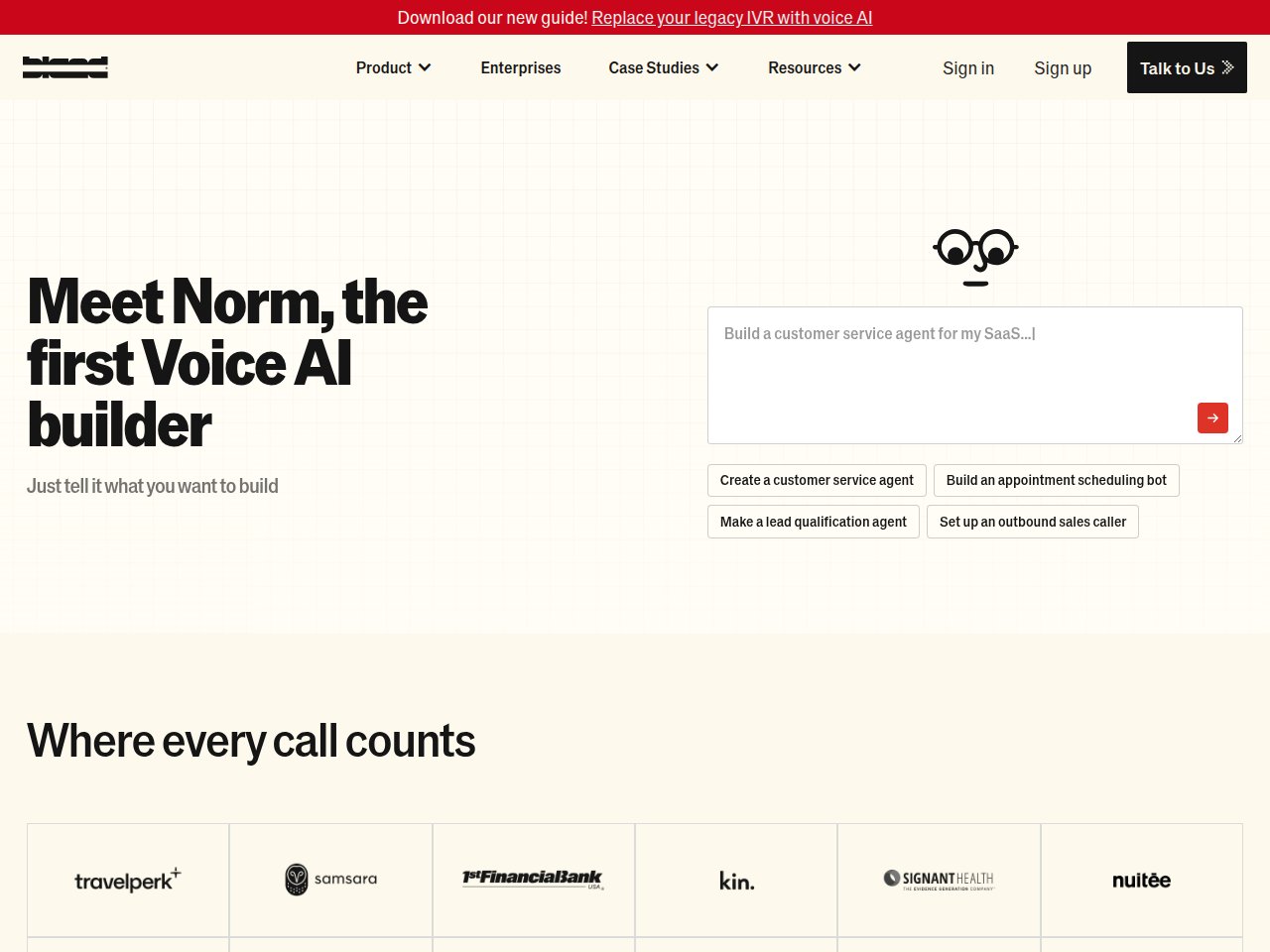

Bland AI takes the opposite approach. Instead of making you assemble your own Voltron of AI services, Bland handles everything in-house. Their self-hosted infrastructure runs custom fine-tuned models, manages telephony, and wraps it all in a single per-minute price.
Their secret weapon is Conversational Pathways — a proprietary system that lets you split conversations into nodes. Think of it as a flowchart for phone calls, where each node handles a specific part of the conversation and conditions determine which path to take next.
My experience setting up Bland AI
Bland AI’s onboarding is suspiciously easy. Like, “is this really all I need to do?” easy. I uploaded a CSV of test numbers, wrote a prompt, picked a voice, and had calls going out within 20 minutes. No webhook debugging. No API key juggling. No existential crisis.
The Conversational Pathways system is genuinely clever for structured calls. I built a cold-calling flow with greeting, qualification, objection handling, and appointment booking nodes in about an hour. Each node has its own prompt, its own conditions for branching, and its own API triggers.
But here’s the thing — Bland AI is an API-only platform. There’s no drag-and-drop visual builder for non-technical users. You’re writing JSON pathway definitions and making API calls. It’s developer-friendly, but it’s still developer-required.
Bland AI pricing breakdown
Bland updated their pricing in December 2025, and it wasn’t great news:
| Plan | Monthly Fee | Per Minute | Daily Call Limit | Concurrency |
|---|---|---|---|---|
| Start | Free | $0.14 | 100 | 10 |
| Build | $299 | $0.12 | 2,000 | 50 |
| Scale | $499 | $0.11 | 5,000 | 100 |
| Enterprise | Custom | Custom | Unlimited | Unlimited |
That free tier used to be $0.09/minute. They bumped it to $0.14 — a 55% increase. Not cool, Bland. Also watch out for the sneaky extra charges: $0.015 per failed call attempt, $0.025/min for transfers on Bland numbers, and $0.02 per SMS. These add up faster than you’d think.
Head-to-Head: Same Cold Call, Two Platforms
I designed a simple test: a cold call to schedule a demo for a fictional SaaS product. The script had to handle a greeting, a quick pitch, two common objections (“I’m busy” and “we already have a solution”), and an appointment booking attempt.
Setting up the test
On Vapi, I configured an assistant with GPT-4o as the LLM, ElevenLabs for TTS, and Deepgram for STT. I wrote a system prompt with objection-handling instructions and connected it to a mock calendar API via webhook. Total setup time: about 2.5 hours (including the webhook debugging saga).
On Bland AI, I built a Conversational Pathway with 5 nodes: greeting, pitch, objection handler, booking, and farewell. Each node had its own mini-prompt and transition conditions. Total setup time: about 45 minutes.
The results
Voice quality: Vapi with ElevenLabs sounded noticeably more natural. The intonation, pacing, and emotion were a step above Bland’s built-in voices. Bland sounded good — definitely not robotic — but in a side-by-side comparison, Vapi’s voice had more “soul.”
Latency: Bland AI responded in about 750-850ms consistently. Vapi varied more — sometimes hitting a zippy 550ms, other times lagging to 900ms depending on the LLM’s response time. Neither felt awkward in conversation, but Bland was more predictable.
Objection handling: This is where Vapi’s LLM-driven approach crushed it. When I threw an unexpected objection (“actually, we just signed with a competitor last week”), Vapi’s GPT-4o powered agent pivoted smoothly: “I totally get that — out of curiosity, what made you choose them? We’ve had several clients switch to us after comparing…” Bland’s pathway-based agent hit its objection node and gave a scripted response that felt generic.
Reliability: Bland AI completed 10/10 test calls without issues. Vapi had one call where the webhook timed out and the agent went silent for 3 seconds before recovering. Small sample size, but it lines up with what I’ve read about Vapi’s occasional reliability hiccups after updates.
The Real Cost — What You’ll Actually Pay
Marketing pages are liars. Here’s what your monthly bill actually looks like for different usage levels, assuming 3-minute average calls:
| Monthly Volume | Vapi (realistic) | Bland AI (Build plan) |
|---|---|---|
| 100 calls (300 min) | $60–$99 | $335 ($299 + $36) |
| 500 calls (1,500 min) | $300–$495 | $479 ($299 + $180) |
| 1,000 calls (3,000 min) | $600–$990 | $829 ($499 + $330) |
| 5,000 calls (15,000 min) | $3,000–$4,950 | $2,149 ($499 + $1,650) |
The pattern is clear: At low volumes, Vapi’s pay-as-you-go model wins because you avoid Bland’s monthly subscription. But at scale, Bland’s all-inclusive per-minute rate becomes significantly cheaper. The crossover point is roughly 400-500 calls per month.
Hidden costs nobody tells you about
Vapi’s hidden costs: You’re managing 4-6 separate provider accounts. Each one has its own billing, its own rate limits, and its own support team. When something breaks at 2 AM, good luck figuring out if it’s Deepgram, ElevenLabs, or Vapi itself.
Bland’s hidden costs: That $0.015 per failed call attempt adds up. If you’re doing outbound cold calling with a 30% answer rate, you’re paying for 70% of calls that go nowhere. On 1,000 outbound attempts, that’s an extra $10.50. Not bank-breaking, but annoying.
What Actually Annoyed Me
Let me be real about the frustrations, because both platforms have them.
Vapi:
- The documentation is a maze. I found three different pages explaining the same feature with slightly different instructions. Which one is current? Who knows!
- Working assistants sometimes break after platform updates. Multiple users in the community have reported this. That’s terrifying for production deployments.
- The “$0.05/minute” marketing is borderline misleading. Your real cost is 3-6x that. Just say what it actually costs, Vapi.
- Support was slow when I had a critical webhook issue. Community Discord was more helpful than official support.
Bland AI:
- That 55% price hike on the free tier in December 2025 felt like a bait-and-switch for early users.
- No visual pathway builder. You’re writing JSON to define conversation flows. It works, but it’s 2026 — give us a drag-and-drop editor.
- Voice clone limits by tier are stingy. One voice clone on the free plan? Five on the $299 plan? Come on.
- Full multilingual support is gated behind enterprise plans. Small businesses doing international outreach get screwed.
Vapi vs Bland AI: Who Should Choose What?
| Your Situation | Choose This | Why |
|---|---|---|
| Developer building custom voice agents | Vapi | Unmatched flexibility, BYO stack |
| High-volume outbound cold calling | Bland AI | Better per-minute rates at scale, CSV batch upload |
| Complex objection handling / sales | Vapi | LLM-driven reasoning handles curveballs |
| Appointment setting at scale | Bland AI | Pathway nodes handle structured flows well |
| Enterprise with compliance needs | Bland AI | SOC II, HIPAA, GDPR built-in |
| Startup testing with small budget | Vapi | No monthly minimum, pay only for usage |
| Non-technical team | Neither | Look at Synthflow instead |
| Best voice quality matters most | Vapi | ElevenLabs integration is chef’s kiss |
What About Synthflow, Retell AI, and Air AI?
If neither Vapi nor Bland AI feels right, here are three alternatives worth considering:
Synthflow is the no-code option in this space. If your team doesn’t have developers and you just need working voice agents, Synthflow lets you build them without writing a single line of code. The trade-off is less customization, but for most business use cases, it’s plenty.
Retell AI is quietly becoming a serious contender. Their pay-as-you-go pricing starts at $0.07/minute with ~600ms latency, and the conversation quality is surprisingly good. If Vapi’s complexity and Bland’s pricing hikes both turn you off, Retell might be the Goldilocks option. I wrote more about it in my Retell AI review.
Air AI — I have to be honest here. As of early 2026, Air AI’s website appears to be inactive. The domain redirects to what looks like a defunct Bubble app page. If they’ve shut down or pivoted, that’s a cautionary tale about choosing voice AI platforms from startups without proven staying power.
Frankie’s Final Verdict
After spending a week bouncing between these platforms, here’s my honest take:
Choose Vapi if you have a developer on your team, you want maximum control over your voice agent’s intelligence, and you’re okay managing multiple provider relationships. The ability to plug in any LLM and fine-tune every aspect of the conversation pipeline is genuinely powerful. Just budget 3-5x what the pricing page suggests.
Choose Bland AI if you need to deploy fast, you’re doing high-volume outbound calling, and you want predictable pricing with enterprise-grade compliance. The Conversational Pathways system is great for structured call flows, and the all-inclusive pricing makes budgeting way easier. Just know you’re trading flexibility for convenience.
If I had to pick one gun-to-my-head? For most businesses getting started with AI voice agents, I’d lean Bland AI. The faster setup time, predictable costs, and enterprise security make it the safer bet. But for dev teams building something truly custom — the kind of voice agent that feels like talking to a real person who actually understands your problem — Vapi is the only platform that gives you enough rope to build something incredible (or hang yourself trying).
Try Vapi Free → Try Bland AI Free →
FAQ
Is Bland AI really better for cold calling?
For high-volume outbound cold calling with simple, structured scripts — yes. Bland AI’s Conversational Pathways and CSV batch upload make it easy to blast through thousands of calls quickly. But if your cold call requires dynamic objection handling or complex branching logic powered by LLMs, Vapi gives you more flexibility to handle unexpected responses.
How much does Vapi cost per minute?
Vapi’s platform fee is $0.05 per minute, but your real cost will be $0.15–$0.33 per minute. You need to add LLM costs ($0.06–$0.10/min for GPT-4o), text-to-speech ($0.05–$0.08/min for ElevenLabs), speech-to-text (~$0.01/min), and telephony (~$0.01/min). You can lower costs by choosing cheaper providers, but you’ll still pay significantly more than $0.05.
Can I use Vapi without coding?
Vapi has a dashboard and a visual Flow Studio builder for basic setups. But in practice, anything beyond a simple greeting-and-transfer flow requires API calls, webhook configurations, and prompt engineering. If you want a true no-code experience, look at Synthflow instead.
Bland AI vs Vapi for appointment setting?
For straightforward appointment setting with CRM integration, Bland AI is easier and faster to deploy. Its pathway nodes handle the qualify-book-confirm flow well out of the box. But if you need the AI to negotiate times, handle complex availability logic, or integrate with custom scheduling systems, Vapi’s LLM-driven approach gives you more room to build something sophisticated.
Which AI voice agent has the lowest latency?
Both platforms deliver sub-1-second latency. Vapi ranges from 550–800ms depending on your model stack and geography. Bland AI is more consistent at around 800ms. In real conversations, neither feels awkward or robotic. If latency is your top priority, Retell AI claims ~600ms with more consistent performance.
Are there better alternatives to both Vapi and Bland AI?
Retell AI offers transparent pay-as-you-go pricing starting at $0.07/min with solid latency. Synthflow is the best no-code option for teams without developers. Your best choice depends on whether you prioritize price, flexibility, or ease of use.